Cups to mL: US, Legal, Metric and UK Cups Compared
Converting cups to mL depends on which cup the recipe means: a US customary cup is 236.588 mL, the US legal cup on nutrition labels is 240 mL, a metric cup is 250 mL, and an old UK imperial cup is about 284 mL. For most American recipes, use 236.6 mL, or 240 mL when a rounded number is fine; for Australian, New Zealand and modern Canadian recipes, use 250 mL.
📏 Try Unit Converter now — freeOpen →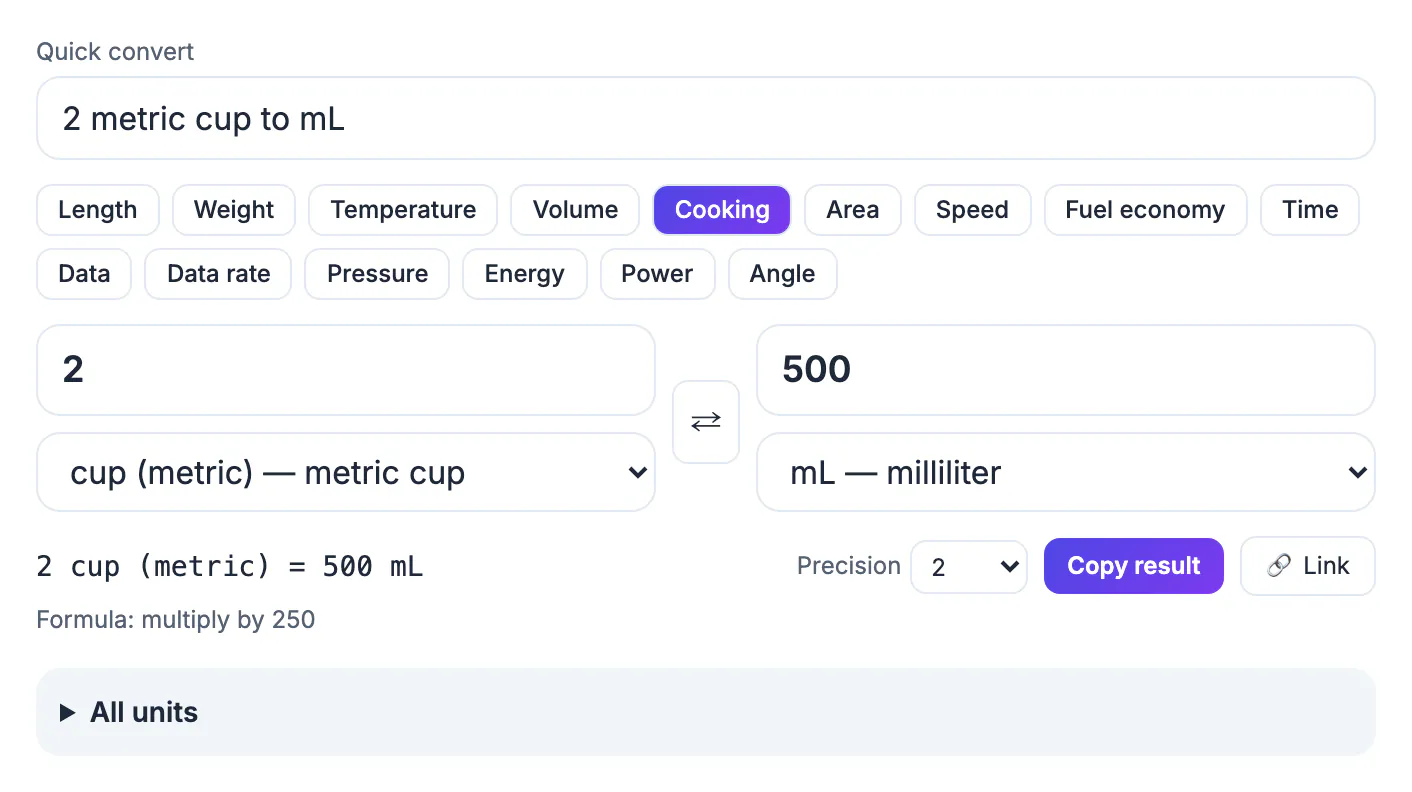
The US kept a cup tied to its own fluid ounce, Britain had a larger imperial ounce and pint, and Commonwealth countries that went metric rounded the cup to 250 mL. Recipes cross borders online without saying which cup they mean, so a cake that worked in Chicago can come out dry in Sydney. The 6% gap between US and metric cups adds up in a recipe with four cups of liquid, and matters more in baking than in soup.
Cups to mL for each type of cup
Four cups you will meet in recipes, from smallest to largest:
- US customary cup: 8 US fluid ounces = 236.5882365 mL. Used in most American cookbooks and on US measuring cups.
- US legal cup: 240 mL. The rounded cup used for serving sizes on US nutrition labels.
- Metric cup: 250 mL. Standard in Australia, New Zealand, South Africa and modern Canadian recipes.
- UK imperial cup: half an imperial pint = 284.130625 mL. Found in older British recipes; modern UK recipes mostly use grams.
Outliers: older Canadian books sometimes used 8 imperial fluid ounces (about 227 mL), and Japanese recipes use a 200 mL cup.
Quick table and spoon sizes
Common amounts in US and metric cups, rounded to whole millilitres:
- ¼ cup: 59 mL US, 63 mL metric.
- ⅓ cup: 79 mL US, 83 mL metric.
- ½ cup: 118 mL US, 125 mL metric.
- 1 cup: 237 mL US, 250 mL metric, 284 mL imperial.
- 2 cups: 473 mL US (one US pint), 500 mL metric.
- 4 cups: 946 mL US (one US quart), 1,000 mL metric. The gap is now 54 mL, almost a quarter cup.
Spoons differ too: a US tablespoon is 14.79 mL and teaspoon 4.93 mL; metric spoons are 15 mL and 5 mL. An Australian tablespoon is 20 mL, which matters for baking powder and salt.
Why cups fail for flour and sugar
A cup measures volume, and how much flour or sugar fits depends on how you fill it.
- Flour: a spooned-and-leveled US cup is often listed at 120 to 130 g; a scooped cup can hold 150 g or more.
- Granulated sugar: about 200 g per US cup.
- Butter: 1 US cup is 2 sticks, 8 oz, about 227 g.
If a recipe gives grams, use a kitchen scale. If it only gives cups, check its origin, measure liquids by volume and spoon flour into the cup and level it rather than scooping.
Cups to mL in GrabCast's Unit Converter
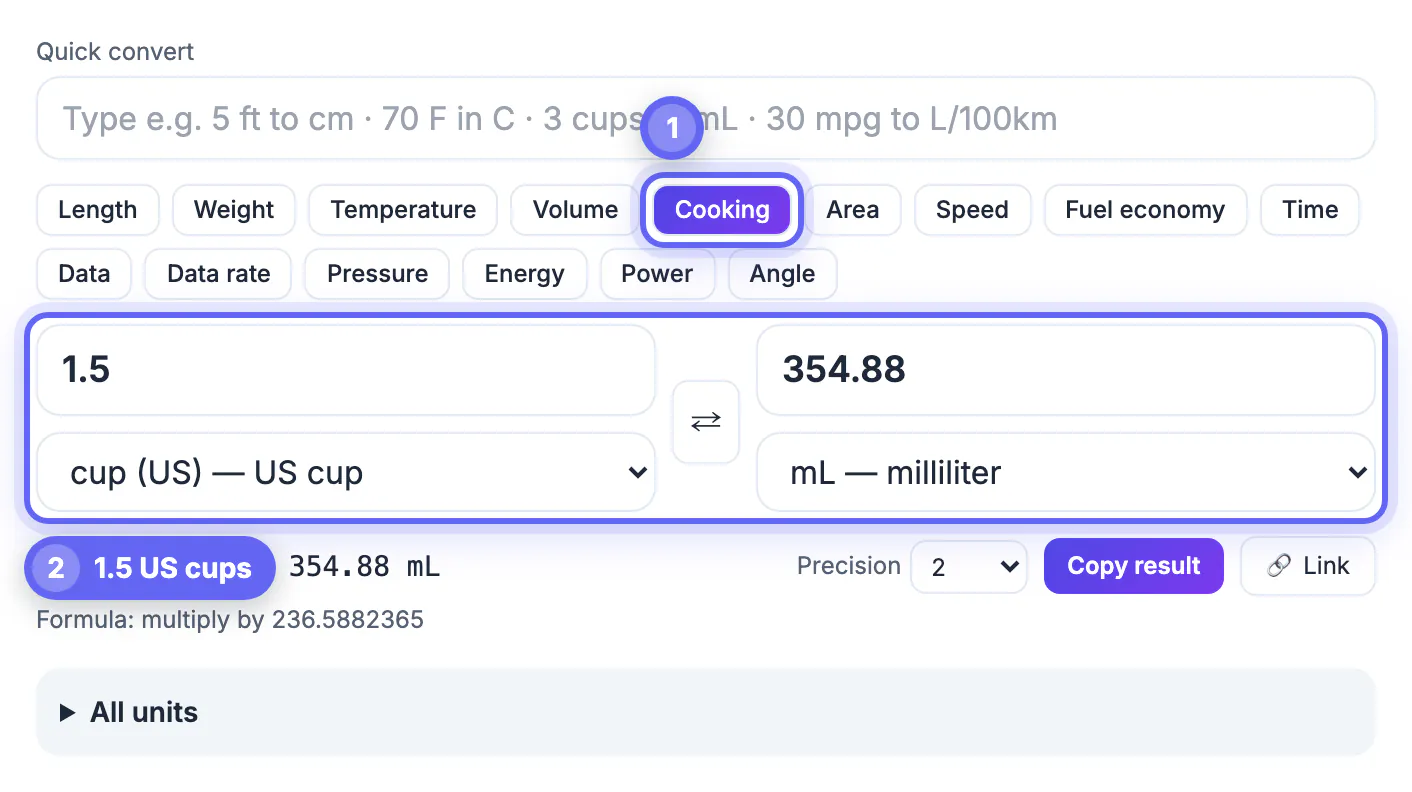
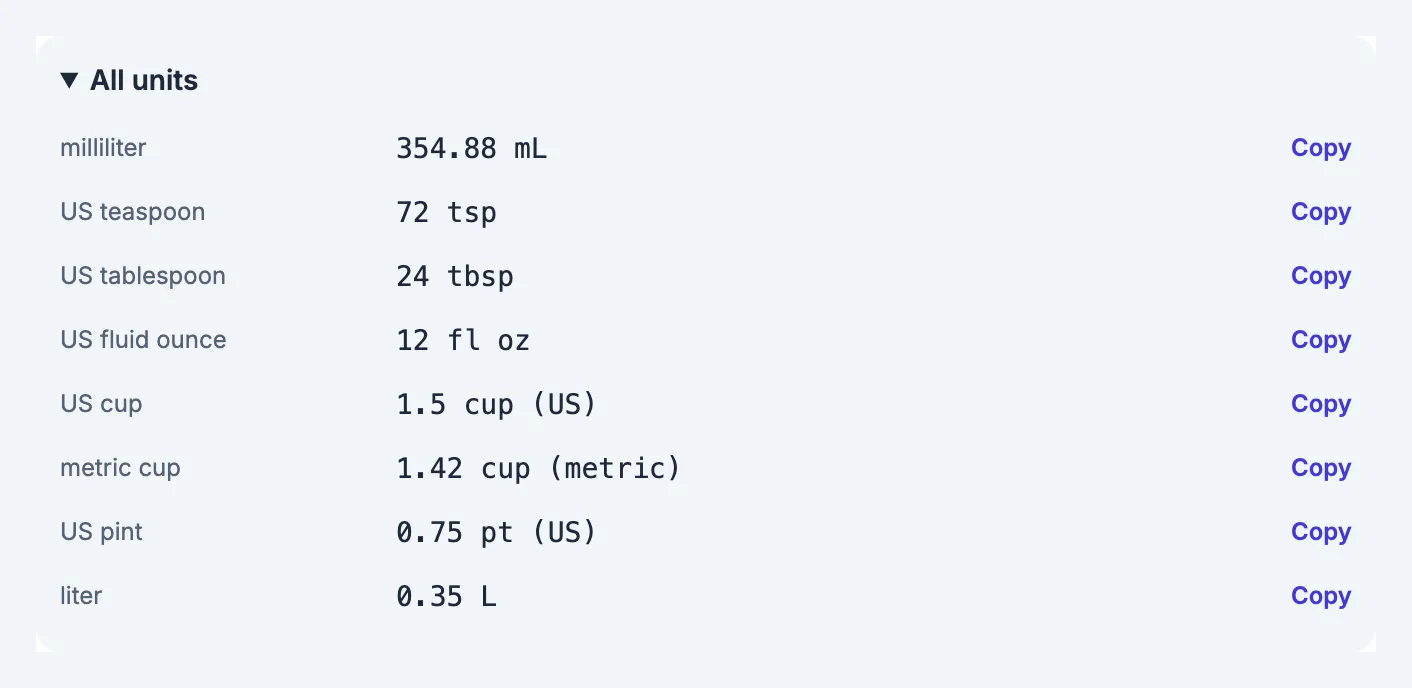
The Cooking category lists mL, US teaspoon, US tablespoon, US fluid ounce, US cup (236.5882365 mL), metric cup (250 mL), US pint and liter. Type 3 cups to mL into Quick convert and it answers about 709.76 mL (it shows 709.7647095); the plain word cups means the US cup.
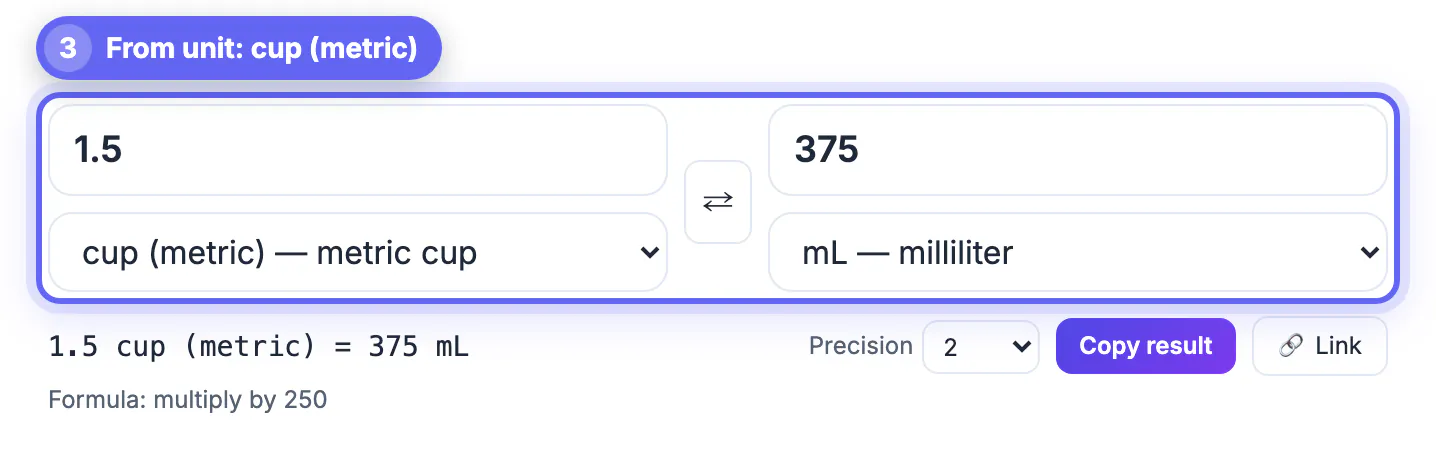
- For a metric cup, pick cup (metric) in the list or type 2 metric cup to mL.
- There is no preset for the 240 mL legal cup, so multiply by 240, or treat it as 1.0144 US cups.
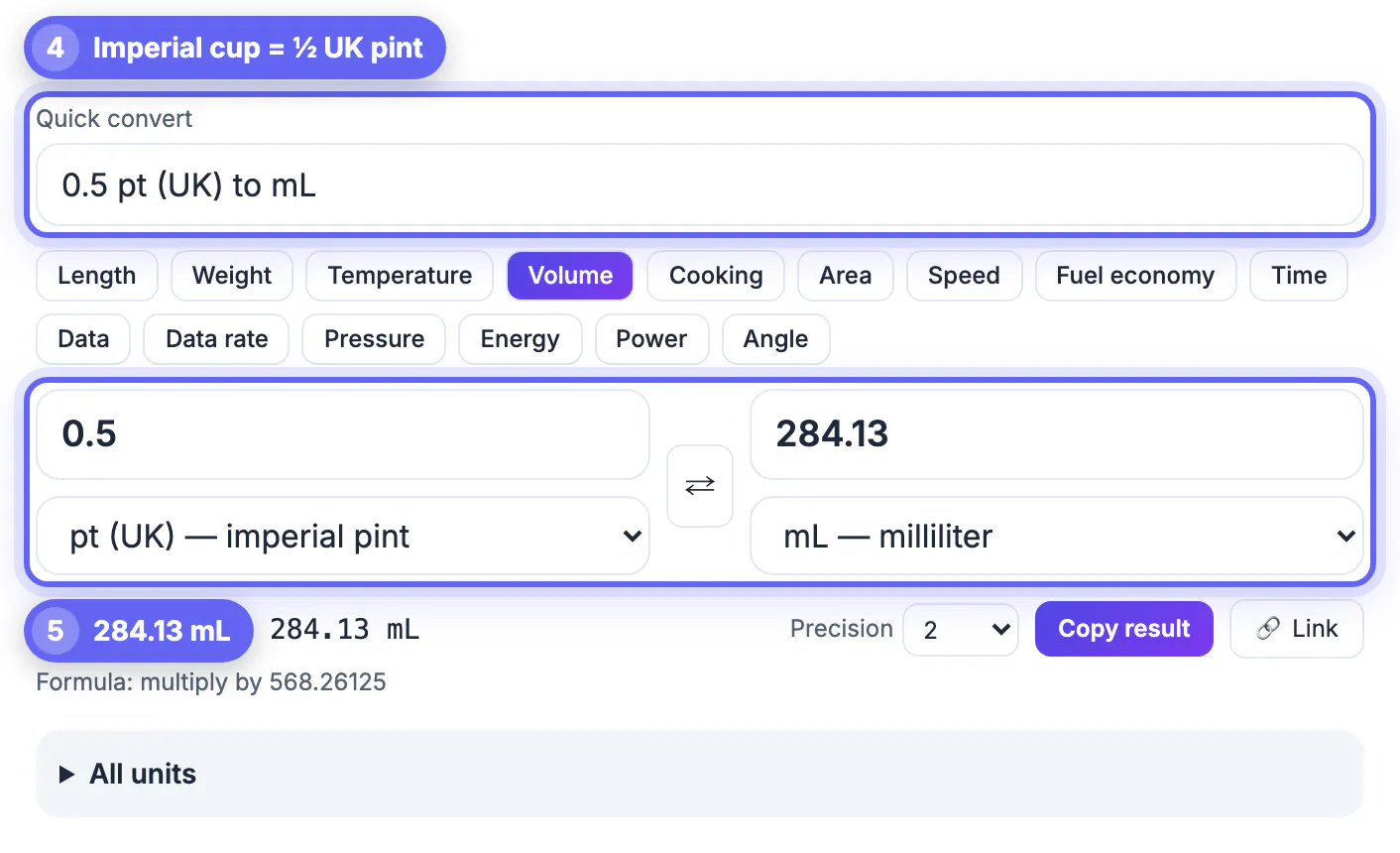
- There is no imperial cup preset either. In the Volume category, enter 10 fl oz (UK) or 0.5 pt (UK) per imperial cup.
- It converts volume only, with no ingredient densities, so it cannot turn a cup of flour into grams.
Conversions run in your browser with exact factors, and the result list shows the amount in every unit of the category at once.
Converting a recipe from cups to metric
Decide which cup the author used, then convert every quantity with the same size so ratios stay right. American blog recipes use the US customary cup, Australian and New Zealand ones use the 250 mL metric cup, and older British books use the 284 mL imperial cup or the pint.
- Liquids: multiply cups by 237 for US recipes, or 250 for metric ones.
- Dry ingredients: weigh them in grams if the recipe lists a weight; otherwise use a reliable conversion chart.
- Spoons: a US tablespoon is about 15 mL and a teaspoon about 5 mL, which match the metric spoon closely.
- Pans and ovens: check the temperature unit too, since Fahrenheit and Celsius differ.
For temperatures, Fahrenheit to Celsius with a chart and travel anchors helps, and mL to fl oz for labels and bars converts the other direction. A broader reference is converting units correctly.
Baking is more forgiving than you think, sometimes
Soups, stews and sauces tolerate a few percent difference between cup types. Bread, cakes and pastry do not, because hydration and the balance of flour, sugar and fat decide the structure. If a baked recipe fails, weigh the ingredients and compare with the author's gram weights instead of adjusting by eye.
Measuring tips for accurate results
Use a clear jug with markings for liquids and read it at eye level on a flat surface. For dry goods, spoon the ingredient into the cup and level it with a knife rather than scooping, which packs more in. If a recipe gives both cups and grams, trust the grams. When converting for a recipe you will repeat, write the final millilitre and gram values on the card so future batches match.
Step-by-step
Common mistakes to avoid
Pro tips
Frequently asked questions
How many mL is 1 cup?
236.6 mL for a US cup, 240 mL for a US nutrition-label cup, 250 mL for a metric cup and 284 mL for an old imperial cup.
Is a UK cup the same as a US cup?
No. The traditional imperial cup is about 284 mL, 20% bigger. Most modern UK recipes avoid cups and use grams and millilitres.
Why do nutrition labels say 1 cup (240 mL)?
US labeling rules round household measures to metric values, and a cup is defined as 240 mL for that purpose.
How many grams is a cup of flour?
Roughly 120 to 150 g depending on how it is filled. Weigh it or follow the recipe's own gram figure.
Can the Unit Converter turn cups of sugar into grams?
No. It converts volume units only and has no ingredient densities, so use a gram weight from the recipe or a density table.
Know which cup the recipe means: 236.6 mL US, 240 mL on labels, 250 mL metric, 284 mL imperial. Convert liquids by volume and weigh flour and sugar.
Related guides
Browse more: all calculator guides · Unit Converter