Free AI Paraphrasing Tool: Reword Text, Keep the Meaning
To paraphrase text with AI, paste it into a free paraphrasing tool, add a one-line note on why you are rewording it (simpler, shorter, more formal), and compare the result with the original before you use a single sentence. The GrabCast AI Writer has a dedicated Paraphrase / reword mode that does this in your browser with no account, and a typical paragraph comes back in a few seconds. Paraphrasing means saying the same thing in different words: you keep every idea, number and claim, but change the vocabulary, sentence order and rhythm. People do it to simplify dense writing, change the tone for a new audience, stop repeating the same phrase, or fit a strict length limit. This guide explains how the rewriter works, what it cannot do, how to catch meaning drift, and where the honest line sits between paraphrasing and plagiarism.
✍️ Try AI Writer now — freeOpen →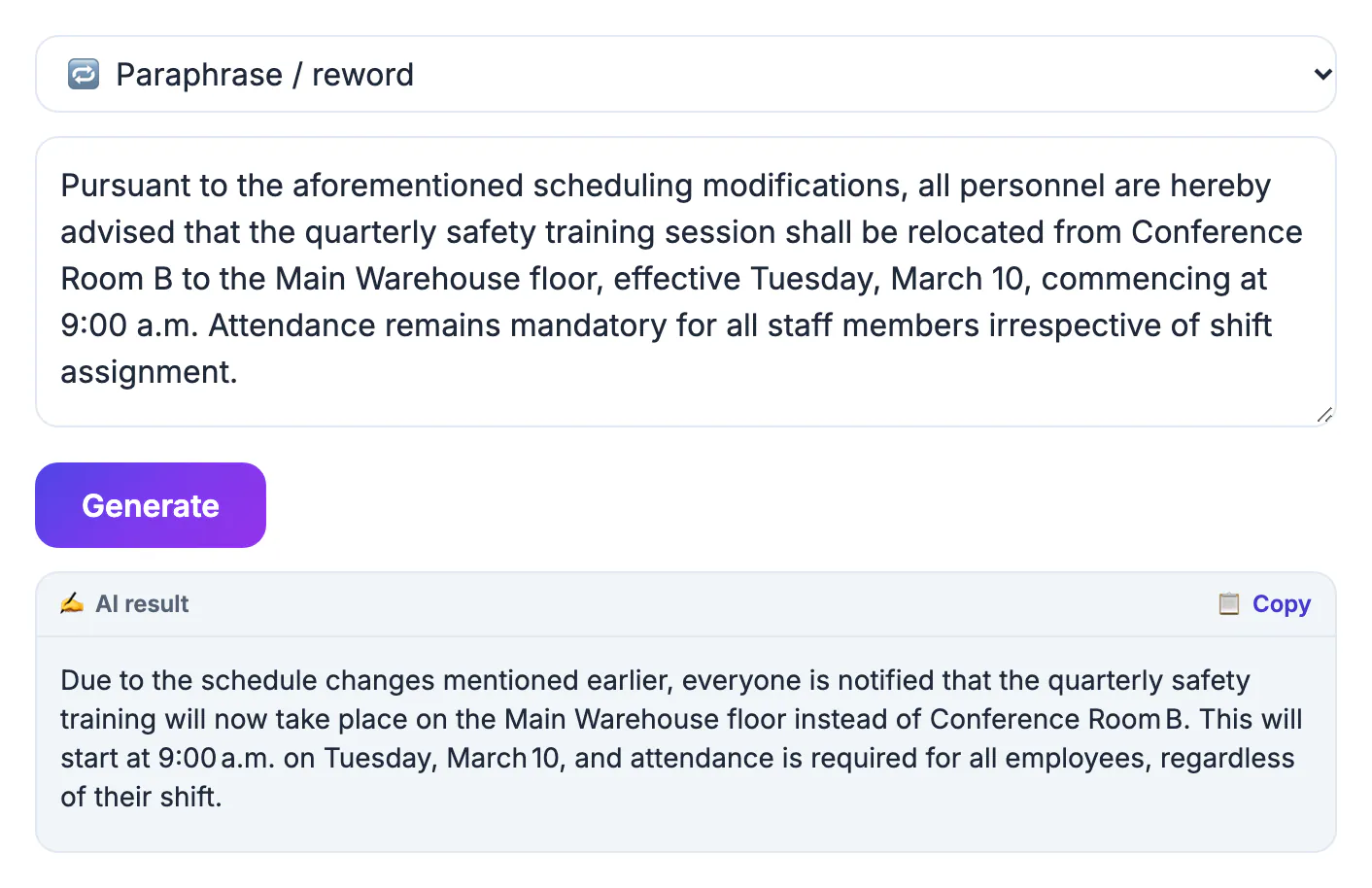
Rewording by hand is slow because you have to hold the meaning steady while changing almost every word, and most people either stay too close to the original or wander away from it. A language model is good at exactly this kind of restructuring: it can turn a passive, clause-heavy sentence into two short active ones, or swap an insider term for a plain one, instead of trading single synonyms the way old spinner tools did. That makes it useful for editing your own drafts, adapting a report for customers, or rewriting a product update for a newsletter. What it is not good at is judgment. It does not know which nuance matters to you, it occasionally hardens a cautious claim, and it cannot decide whether you need to credit a source. Treat every AI paraphrase as a proposal, not a finished line.
How the free AI paraphrasing mode works
Open the AI Writer, choose Paraphrase / reword from the mode menu, paste your text and click Generate. The tool sends a fixed instruction to the AI, roughly: rewrite this in fresh wording while keeping the meaning. There is no separate tone or length slider, so if you have a specific goal, put a short note above your text, such as Rewrite for a general reader, under 120 words. The note travels with the text and the model usually follows it.
- Each request can be about 8,000 characters including the instruction, which is roughly 1,200 to 1,300 words of English. Split longer documents into sections.
- The shared free service allows about 12 requests per minute and 300 per day from one IP address, which is plenty for editing but not for bulk rewriting.
- The result is plain text with a Copy button, so it pastes cleanly into Google Docs, Word or a CMS without stray formatting.
- Your text goes to the GrabCast server and on to an AI provider (Groq, with Pollinations as a backup), and replies are cached in memory for about 30 minutes. Do not paste confidential material.
Pick a rewrite goal before you paraphrase
A vague request produces a vague rewrite. Decide what is wrong with the original first, because the fix for dense writing is different from the fix for a repetitive one. Here is a real example of a clarity rewrite: the original Quarterly revenue exhibited a notable contraction attributable to supply chain disruptions becomes Sales fell this quarter because suppliers could not deliver on time. Same fact, half the syllables.
- Simpler: ask for plain language or a lower reading level when the source is technical, legal or academic.
- Different register: move a stiff internal memo toward a friendly customer note, or a casual draft toward a formal report.
- Shorter: set a word target when a form field, abstract or bio has a hard limit, then count the result.
- Less repetitive: paraphrase only the second and third uses of a phrase so a long document stops echoing itself.
- New audience: restate an engineering update for sales, or a clinical summary for patients, keeping every figure intact.
Check the paraphrase against the original
A smooth rewrite that says something slightly different is worse than a clunky original, because it looks trustworthy. The most common drift is small: may reduce the risk turns into reduces the risk, or some customers becomes customers. Paste both versions into a text diff checker to see every changed word side by side, then read the changed spots closely.
- Numbers, dates, names and units must survive unchanged. A rewrite has no reason to touch 14.2% or March 3.
- Watch negations and limiters such as not, only, never, at least and up to, which models sometimes drop.
- Look for hedges that became certainties and opinions that became facts.
- Keep technical terms your readers expect. Replacing a defined term with a synonym can confuse a specialist audience.
After rewording, a quick proofreading pass catches awkward phrasing the rewrite may have introduced.
Paraphrasing and plagiarism: the honest rules
Rewording someone else's ideas does not make them yours. If the idea, finding or argument came from a source, you still cite it, whether you quote it, summarize it or paraphrase it by hand or with AI. Running copied text through a rewriter to slip past a plagiarism checker is still plagiarism, and schools and publishers increasingly treat it that way.
- Free use: your own drafts, emails, reports and posts. Rewrite them as often as you like.
- Cite anyway: facts, statistics, arguments and phrasing that came from an article, book or study.
- Quote instead: definitions, legal wording and memorable lines where the exact words matter.
- Check the rules: many courses now set their own AI policy, and some ban AI rewriting entirely. Read the syllabus before you use it on coursework.
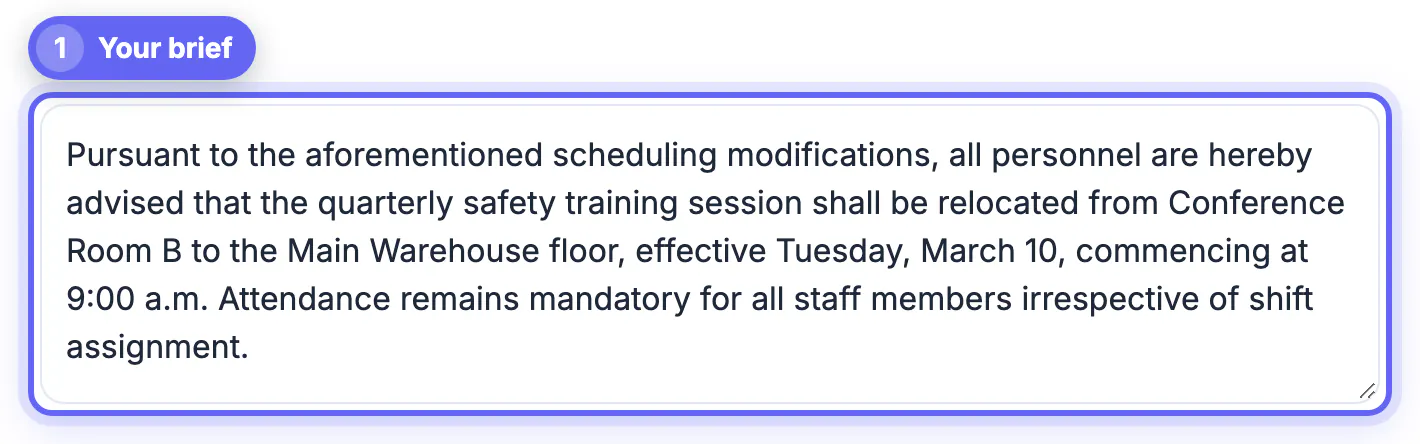
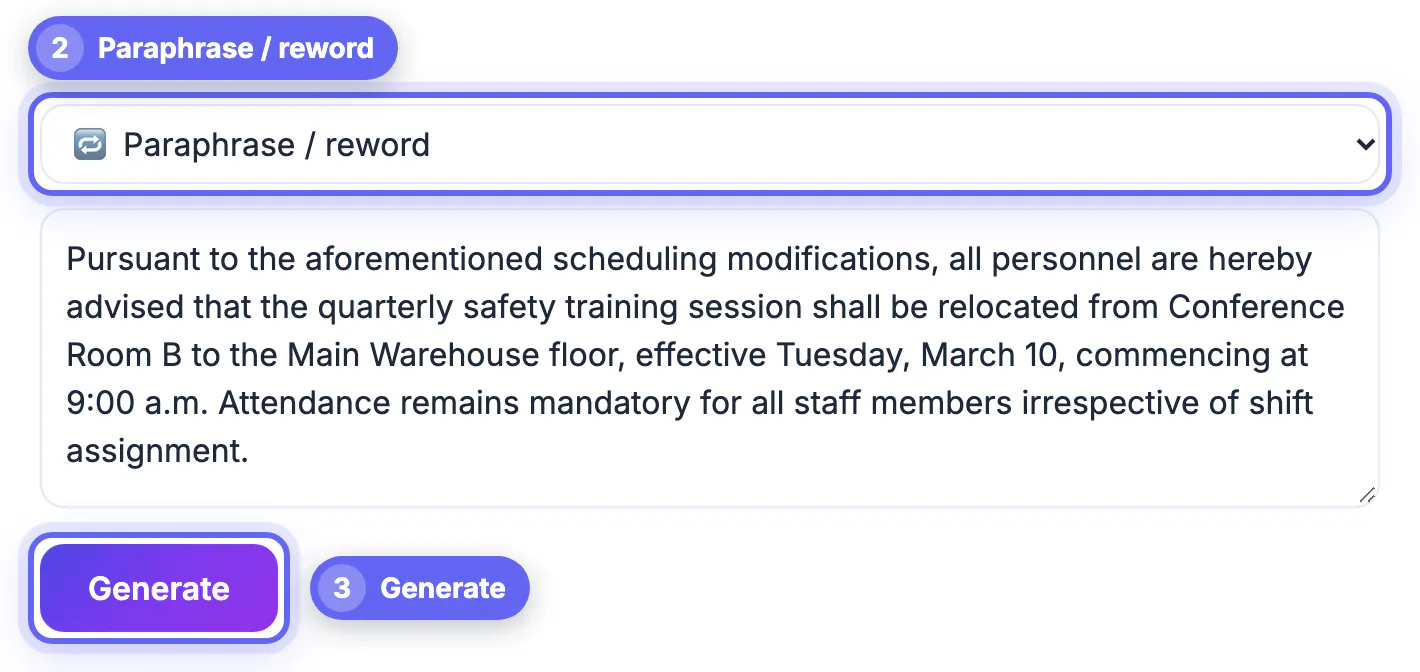
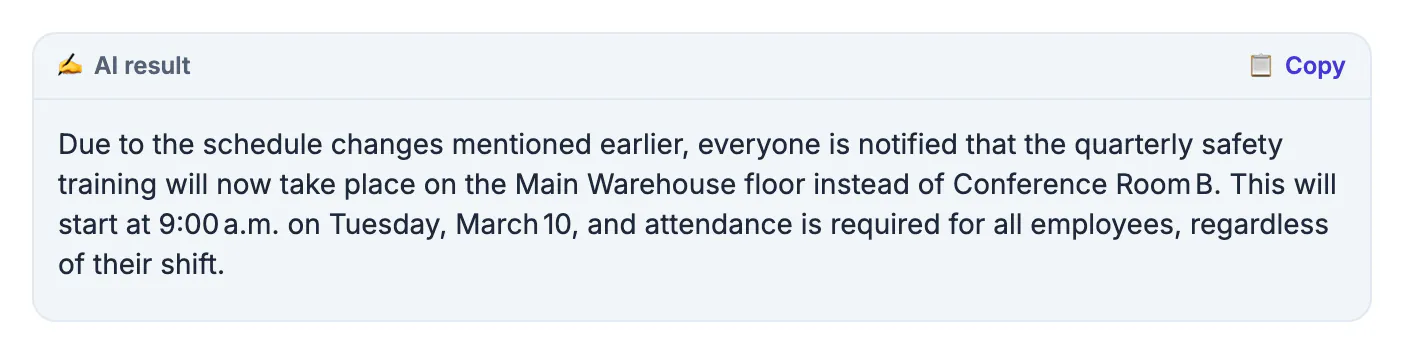
Step-by-step
Common mistakes to avoid
Pro tips
Frequently asked questions
What does paraphrasing actually do?
It restates text in different words and structure while keeping the same meaning. Writers use it to simplify, change tone, avoid repetition or adapt content for another audience, not to change what the text claims.
Is the AI paraphrasing tool free, and how much can I paste?
Yes, it is free with no signup. Each request can be about 8,000 characters, and the shared service allows roughly 12 requests a minute and 300 a day per IP address, so work section by section on long documents.
Does paraphrasing with AI avoid plagiarism?
No. If the ideas came from a source, you still need to credit it. Rewording removes copied phrasing, not the obligation to cite, and using a rewriter to hide copying is still plagiarism.
Will the rewrite keep my meaning?
Usually, but not always. Models sometimes drop a limiter, turn a hedge into a certainty or swap a precise term for a loose one, so compare the two versions before you use the new text.
Can it simplify complex or technical text?
Yes. Add a note such as rewrite in plain English for a general reader above your text. Keep defined terms your audience needs, and check that simplifying did not remove an important condition.
A free AI paraphrasing tool is fastest when you give it a job: simpler, shorter, more formal or less repetitive. Paste one section at a time, add a one-line goal, and compare the rewrite with the original so numbers, limiters and hedges survive. Credit any ideas that came from a source, because new wording does not change who had the idea. Used that way, the GrabCast AI Writer turns a slow rewording chore into a few minutes of checking.
Related guides
Browse more: all AI guides · AI Writer