How Your Mortgage Payment Is Actually Built
Before you trust any number, it helps to understand how a mortgage payment is actually built. The figure your lender quotes is not one thing; it is several costs bundled into a single monthly amount, and knowing the parts explains why two loans of the same size can cost very different sums each month. This explainer breaks a mortgage payment into its components, shows how interest is front-loaded over the life of the loan, and clarifies what escrow really covers. You can plug your own numbers into the free GrabCast Mortgage Calculator, which runs in your browser with no signup, but the goal here is understanding rather than just a result, so the estimate it gives you finally makes sense.
🏠 Try the Mortgage Calculator tool now — freeOpen →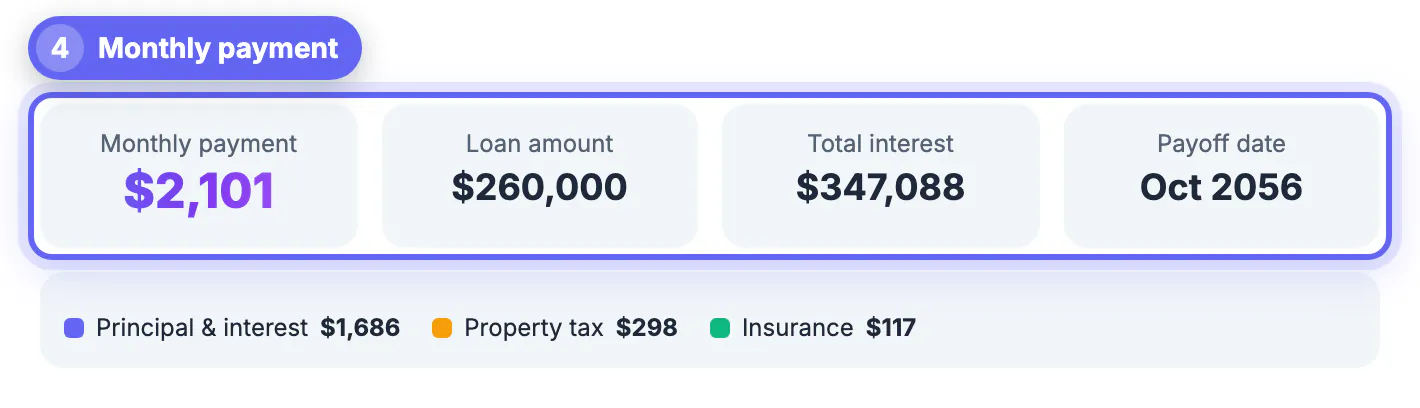
People shopping for a home often fixate on the sticker price and the interest rate, then feel blindsided when the real monthly payment arrives higher than expected. The gap comes from costs folded into the payment that the headline rate never mentions. Understanding the breakdown lets you compare offers honestly, spot when a low rate hides high fees or taxes, and budget for the payment that will actually leave your account. It also demystifies why early payments barely dent the balance while later ones chip away quickly. Armed with the components, you stop treating the monthly figure as a black box and start seeing exactly where your money goes, which makes every comparison and every extra-payment decision far easier to reason about.
The four parts of a mortgage payment
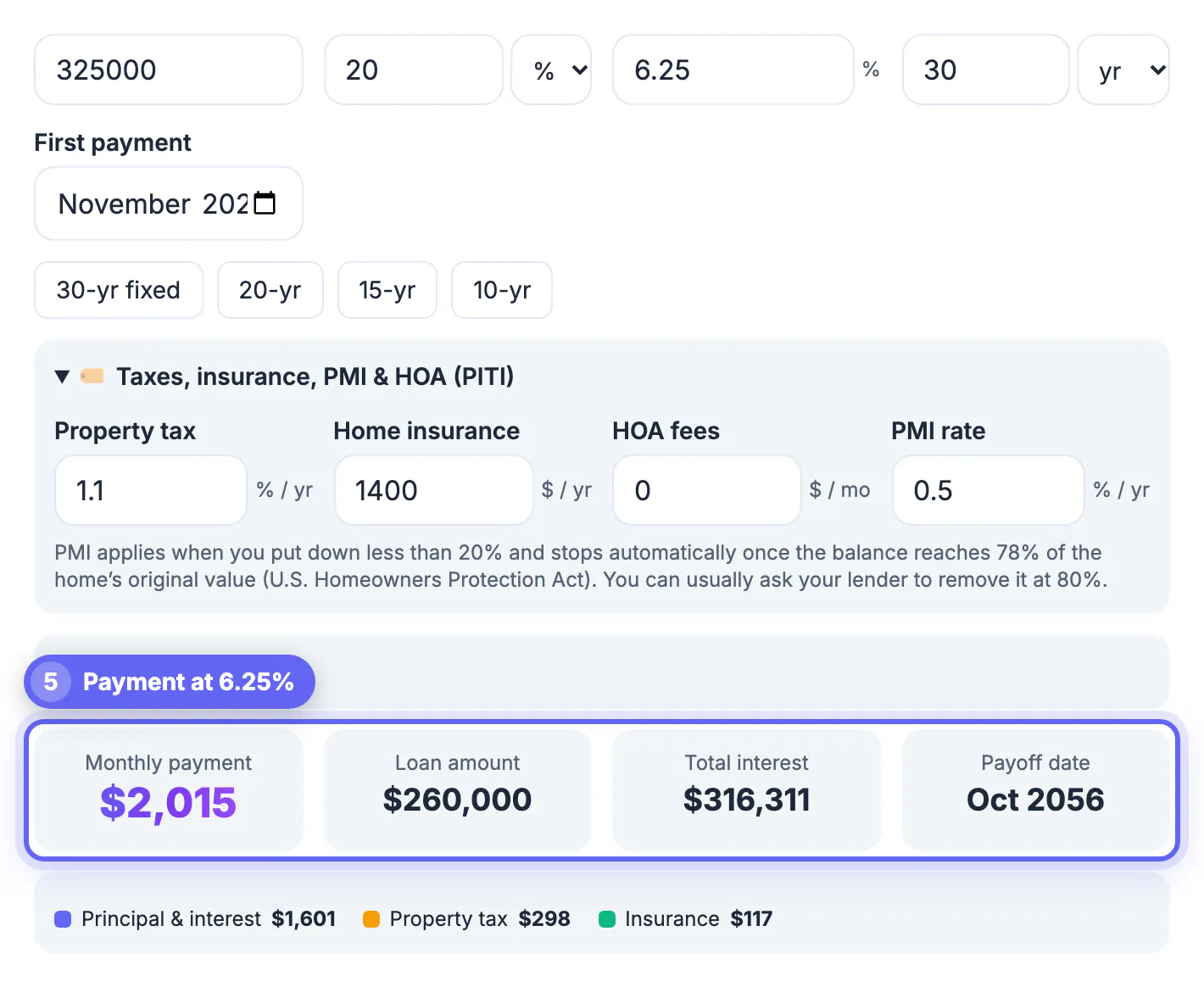
A typical monthly payment, often abbreviated PITI, combines four distinct costs. Only the first two repay the loan itself; the others are bundled in for convenience.
- Principal, the portion that actually reduces what you borrowed.
- Interest, the lender's charge for lending you the money.
- Taxes, your property taxes collected and held in escrow.
- Insurance, homeowner's coverage and sometimes mortgage insurance.
How principal and interest are calculated
The core payment comes from an amortization formula that spreads the loan and its interest evenly across the term. Each month, interest is charged on the remaining balance, and whatever is left of your payment reduces the principal.
Because the balance is largest at the start, early payments are mostly interest and barely touch what you owe. As the balance shrinks, more of each payment goes to principal, which is why progress feels slow for years and then accelerates.
What escrow adds on top
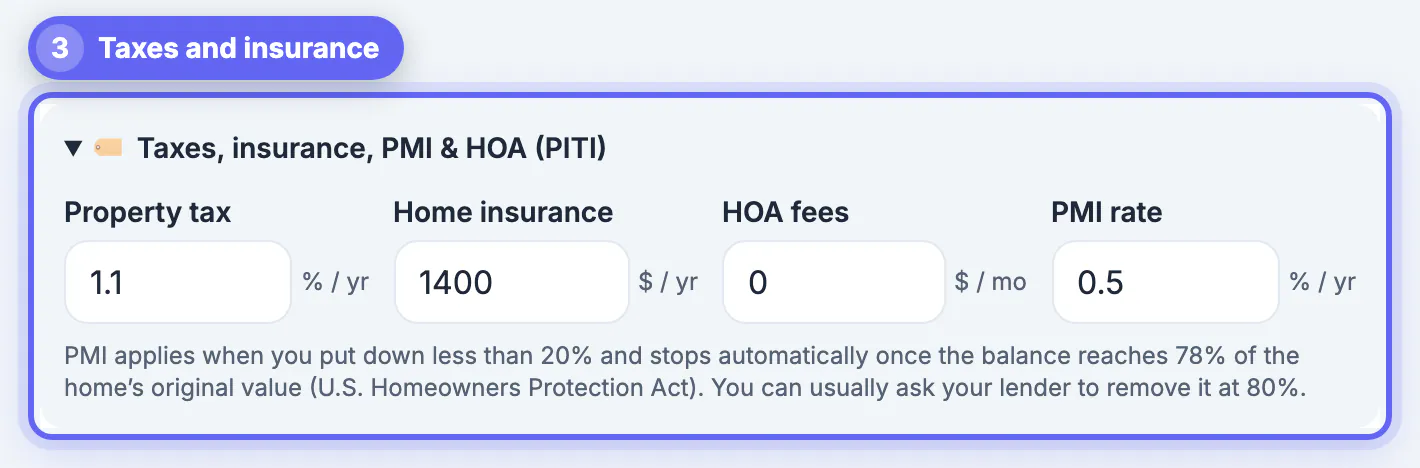
Most lenders collect property taxes and insurance alongside the loan payment and hold them in an escrow account, paying those bills on your behalf when they come due. This is why your payment can rise even on a fixed-rate loan: taxes and insurance premiums change over time.
If your area has high property taxes, escrow can be a surprisingly large slice of the monthly total, sometimes rivaling the interest itself.
Why identical loans cost different amounts
Two borrowers with the same loan amount can face very different payments because of the rate, the term length, the local tax rate, and insurance costs. A longer term lowers the monthly figure but raises total interest paid.
Seeing these levers separately is what a good calculator gives you: change one input at a time and watch how the monthly cost and lifetime interest respond.
A worked example with real numbers
Take a $320,000 loan at 6.5 percent over 30 years. The principal and interest portion comes to roughly $2,023 a month. That figure never changes on a fixed-rate loan. Property tax at 1.1 percent of a $400,000 home adds about $367 a month, and homeowner's insurance near $140 brings the total to around $2,530.
- In the first month about $1,733 of the $2,023 is interest and only $290 reduces the balance.
- By year 15 the split is closer to even, and in the final years nearly all of each payment is principal.
- If your down payment is under 20 percent, private mortgage insurance can add another $100 to $250 monthly until you reach enough equity.
To see how an extra payment changes this picture, read what extra mortgage payments save in interest, or compare terms in the 15-year versus 30-year cost gap.
Ways to lower the monthly figure
Once you know which part of the payment is the problem, you can target it instead of simply hunting for a lower rate.
- A larger down payment shrinks the principal and can remove mortgage insurance once you cross 20 percent equity.
- A longer term cuts the monthly cost but increases the total interest paid over the loan.
- Shopping several lenders on the same day lets you compare quotes without separate credit impacts.
- Appealing an inflated property tax assessment lowers the escrow slice permanently.
- Raising your homeowner's insurance deductible can reduce the premium, as long as you can cover the gap in an emergency.
Remember that closing costs, moving expenses and ongoing upkeep sit outside the payment but still belong in your budget before you commit.
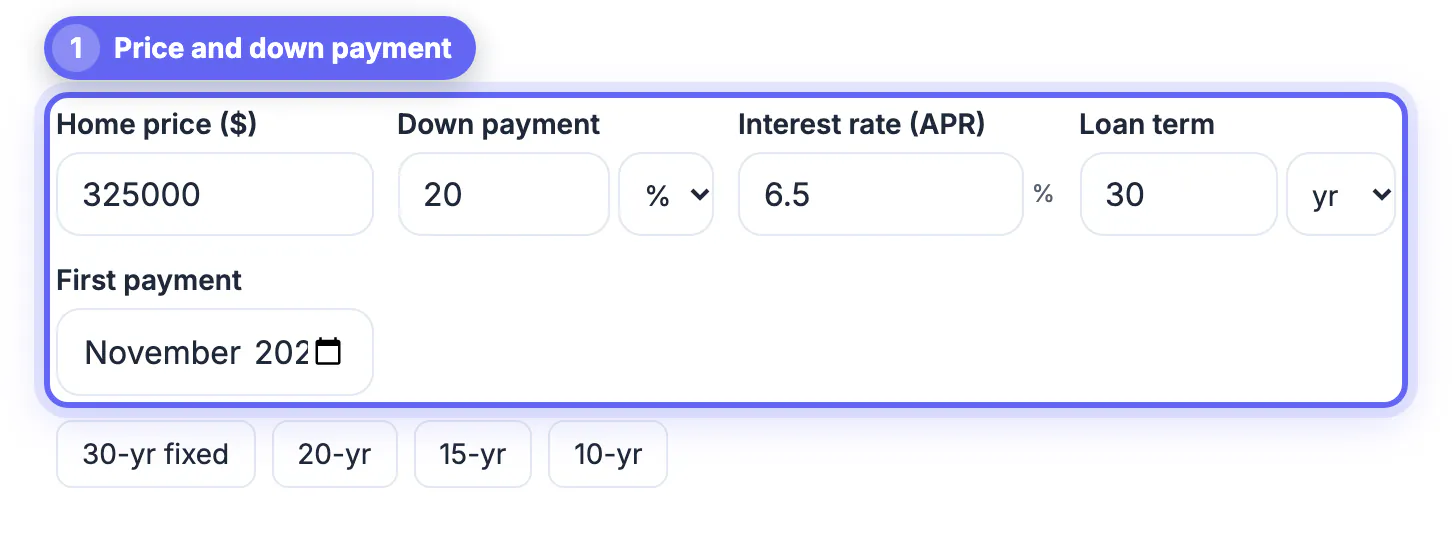
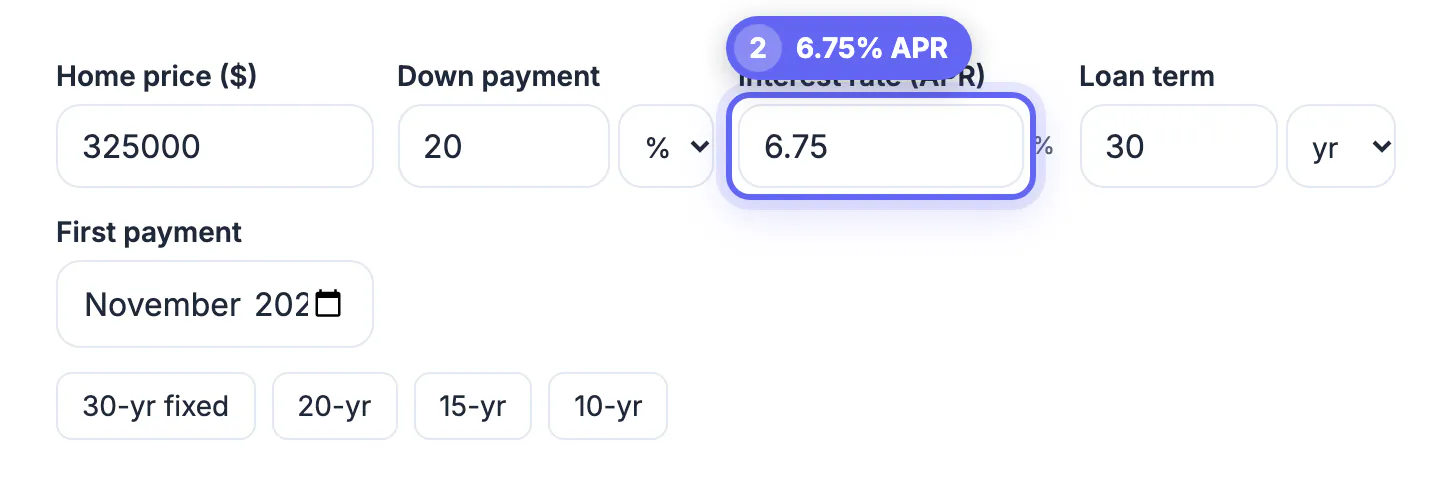
Step-by-step
Common mistakes to avoid
Pro tips
Frequently asked questions
What does PITI stand for?
Principal, interest, taxes, and insurance, the four parts most lenders bundle into a single monthly mortgage payment.
Why is my early payment mostly interest?
Interest is charged on the remaining balance, which is largest at the start. Early on, little is left to reduce principal, so progress feels slow.
Can a fixed-rate payment still change?
Yes. The principal and interest stay fixed, but escrowed taxes and insurance can rise or fall, changing the total you pay each month.
Does the calculator need any signup?
No. The GrabCast Mortgage Calculator runs in your browser with no account, so you can model payments instantly and privately.
A mortgage payment is principal, interest, taxes, and insurance bundled into one figure. Interest dominates early payments, escrow can rival it in high-tax areas, and the rate and term decide the rest. Understand the parts and the monthly number stops being a mystery, so you can compare offers and plan with confidence.
Related guides
Browse more: all calculator guides · the Mortgage Calculator tool