Extra Mortgage Payments: What You Save in Interest
Adding $200 a month to a $360,000 mortgage at 6.5% saves about $109,000 in interest and pays the loan off six years early. Extra mortgage payments work because every dollar goes straight to principal, and principal is what interest is charged on. The effect is largest early in the loan, when most of each payment is interest. Below are the real figures for common strategies, the fine print that decides whether your extra money is applied correctly, and the situations where paying ahead is not the smartest use of cash.
🏠 Try the Mortgage Calculator tool now — freeOpen →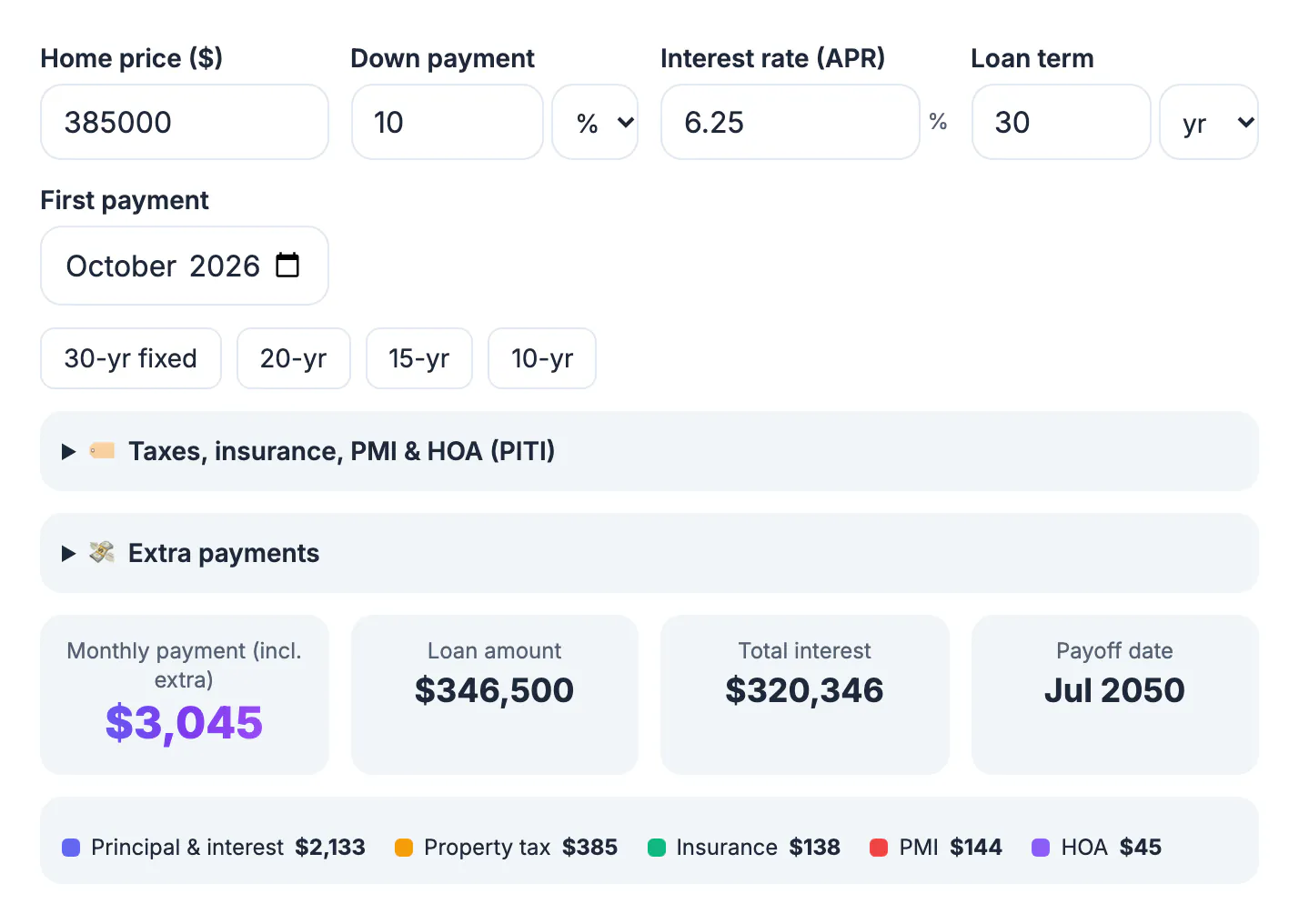
In month one of a 30-year, $360,000 loan at 6.5%, the required payment is $2,275.44, yet only $325 of it reduces the balance; the other $1,950 is interest. An extra $200 therefore raises that month's principal reduction by more than 60%. Each dollar you prepay also stops generating interest for every remaining month of the loan, so its benefit compounds quietly in your favor. That is why the savings are counted in tens of thousands of dollars rather than in the few thousand you might expect.
How much extra mortgage payments save: the numbers
All examples use a $360,000 balance, a 6.5% fixed rate and a 30-year term. With no extra money the borrower pays about $459,160 in interest over 360 payments.
- $100 extra per month: interest falls to about $396,250, saving roughly $62,900, and the loan ends after 26 years 7 months
- $200 extra per month: interest falls to about $350,240, saving roughly $108,900, with payoff in 23 years 11 months
- $500 extra per month: interest falls to about $263,030, saving roughly $196,100, with payoff in 18 years 9 months
- One extra full payment a year, spread as about $190 a month: saves roughly $104,700 and finishes in about 24 years 2 months
- A single $10,000 lump sum in the first month: saves roughly $54,500 and trims about 2 years 4 months
Notice the timing effect in the last line. A one-time $10,000 early in the loan saves almost as much as $100 a month for decades, because it has the longest runway to stop interest from accruing.
Biweekly plans, lump sums and recasting
There are several ways to prepay, and they differ in flexibility more than in math.
- Biweekly: paying half the monthly amount every two weeks produces 26 half payments, or 13 full payments a year; you get the same result by adding one twelfth of a payment each month
- Third-party biweekly services sometimes charge setup or per-payment fees for something you can do yourself for free
- Lump sums from a bonus or tax refund work best early; the same check in year 25 saves far less
- A recast lets you pay a large lump sum and ask the lender to recalculate a lower required payment on the same term, usually for a fee of a few hundred dollars
Prepaying shortens the loan but does not lower the required payment. If you want a smaller monthly bill instead of an earlier payoff date, a recast is the tool to ask about.
Make sure the extra goes to principal
The savings above only happen if your servicer applies the money to principal immediately. Some servicers hold unlabeled extra money as a future payment or put it in suspense.
- Choose the principal-only option in your servicer's online portal, or write principal only on the memo of a check
- Check the next statement and confirm the principal balance dropped by the full extra amount
- Most loans made since 2014 have no prepayment penalty, and where one exists it is limited to the first three years; still, read your note
- On conventional loans, extra principal also gets you to 20% equity sooner, so you can request PMI removal earlier
When paying extra is not the best move
A guaranteed 6.5% return by avoiding interest is excellent, but it is not the only priority, and money sent to the lender is hard to get back.
- Build an emergency fund of three to six months of expenses first, since home equity is not cash when you lose a job
- Pay off credit cards and other debts charging more than your mortgage rate before prepaying the mortgage
- Capture any employer retirement match, which is an instant return no mortgage prepayment can beat
- On a loan below 4%, many people prefer high-yield savings or investments that can earn more than the loan costs
A balanced approach is common: meet those priorities, then direct a fixed extra amount to the mortgage automatically so it happens without monthly decisions.
Run your own loan through the Mortgage Calculator, and test the invest-instead option in the Compound Interest calculator.
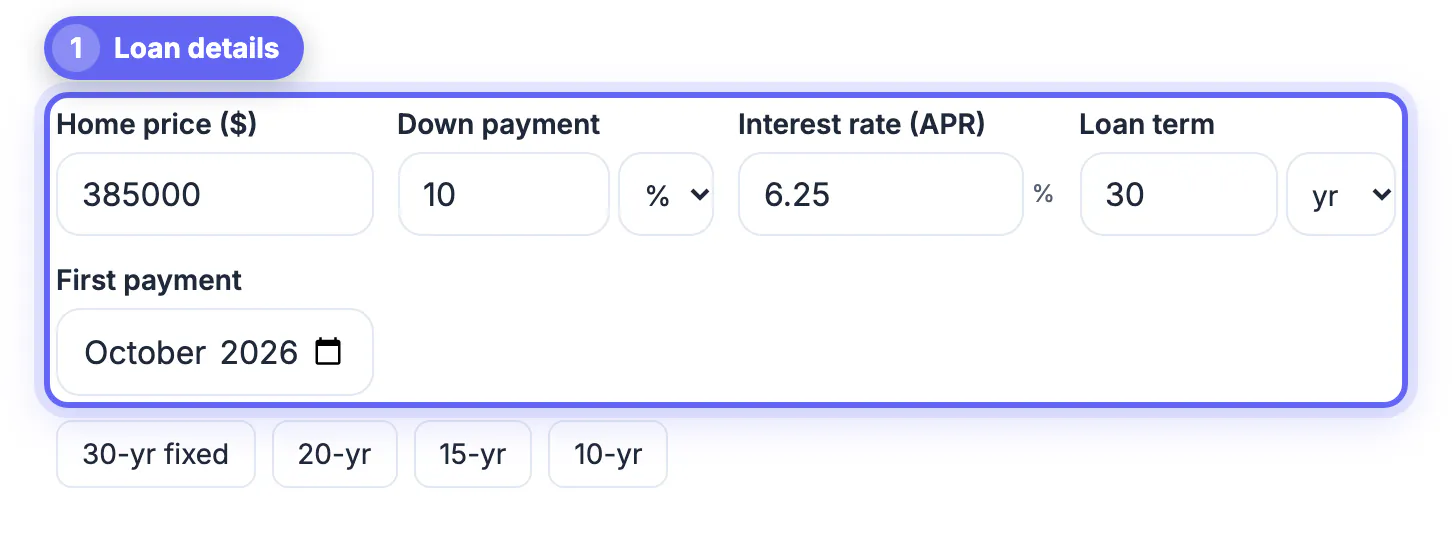
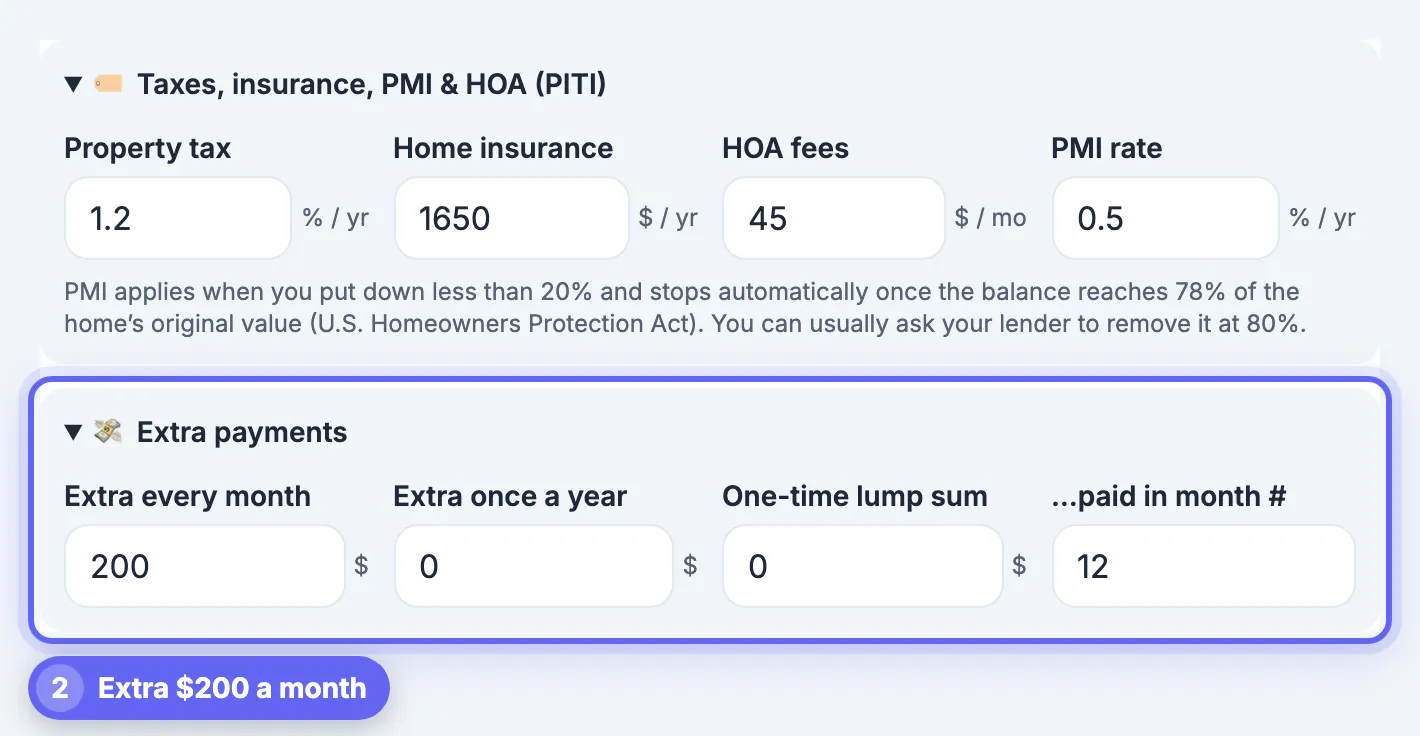
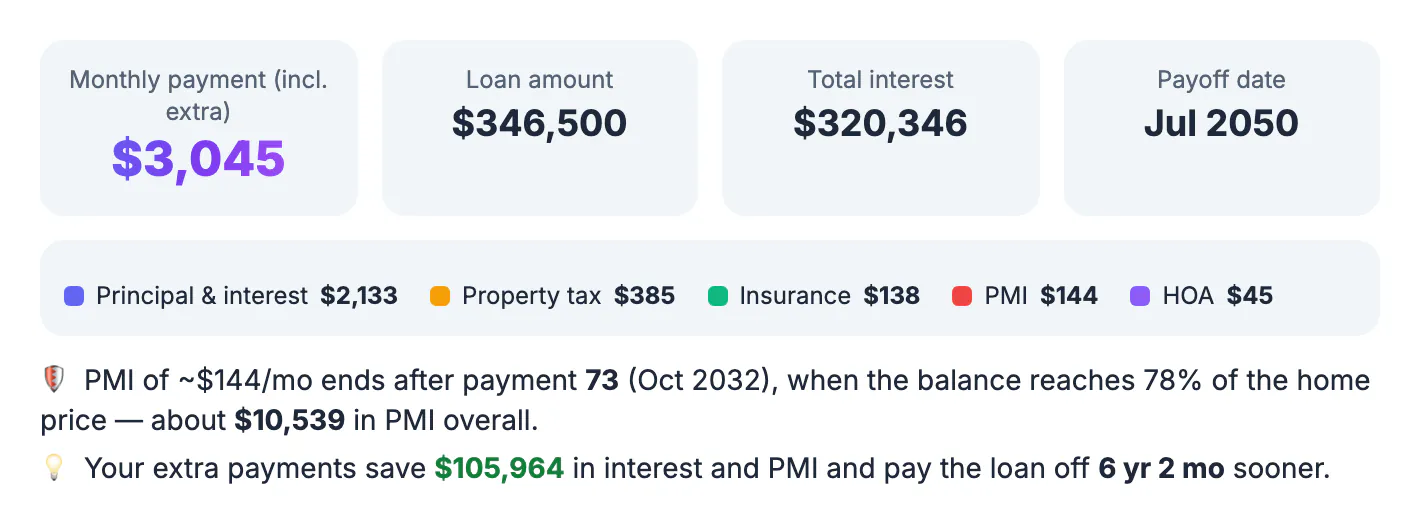
Step-by-step
Common mistakes to avoid
Pro tips
Frequently asked questions
Is it better to pay extra monthly or one lump sum a year
Money paid sooner saves slightly more, so monthly extra beats the same total paid once in December. The difference is small; consistency matters more than the schedule.
Do extra payments lower my monthly payment
No. They shorten the loan and cut total interest, but the required payment stays the same unless you ask the lender to recast the loan.
Can I stop making extra payments later
Yes. Extra principal is voluntary, so you can pause any month. That flexibility is the main advantage over refinancing into a shorter term.
Should I pay extra on a 3% mortgage
It depends on your alternatives. With a 3% rate, a savings account or investments may earn more, but paying extra still guarantees a 3% return and reduces debt risk.
Does the calculator apply extra from the first month
Yes. The Extra every month amount is added from the first payment; you can also test a once-a-year extra or a one-time lump sum in any month, and the tool reports the interest and PMI saved and the new payoff date.
Extra mortgage payments go straight to principal, so even $100 or $200 a month saves tens of thousands and ends the loan years early; mark every extra dollar principal only, handle high-interest debt and savings first, and let the calculator show your exact new payoff date.
Related guides
Browse more: all calculator guides · the Mortgage Calculator tool