Mortgage Payment Calculator: Compare Rates and Quotes
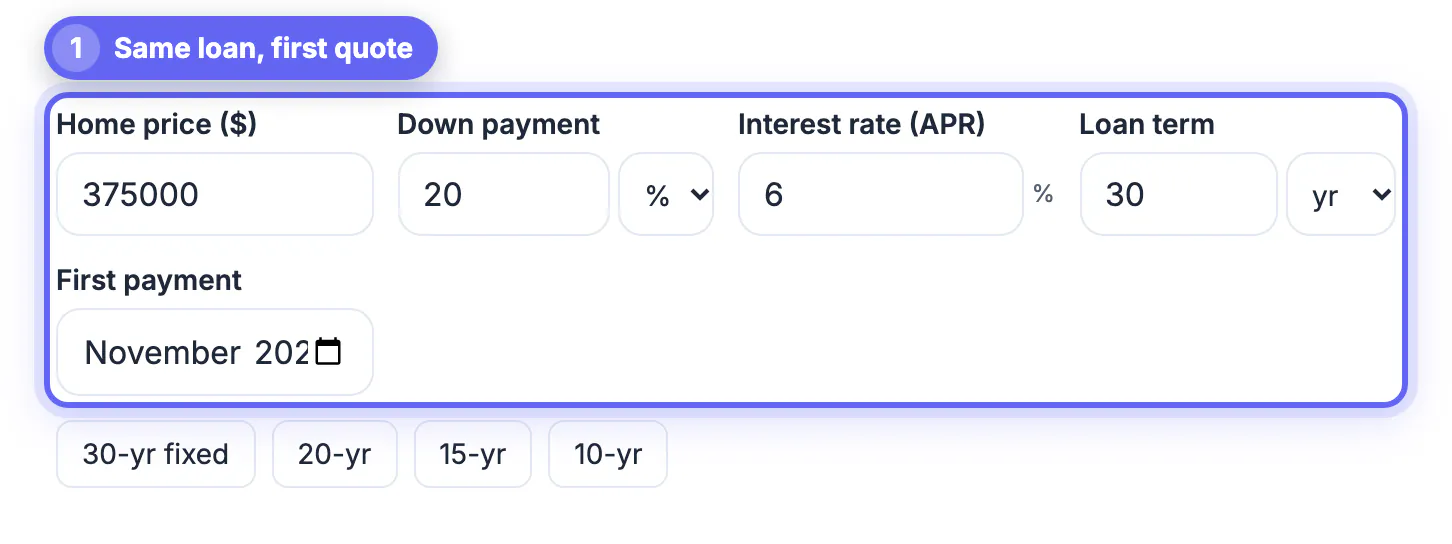
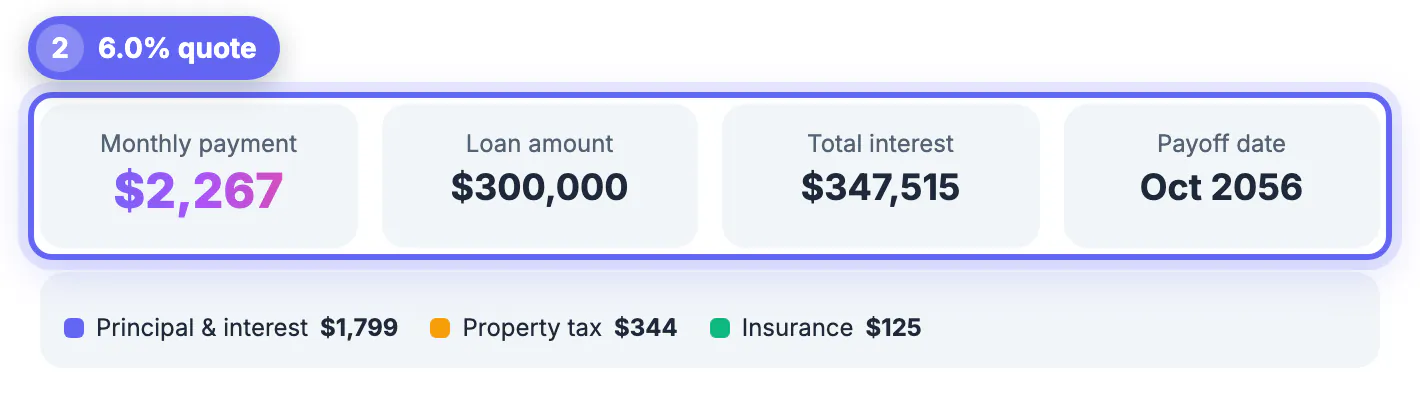
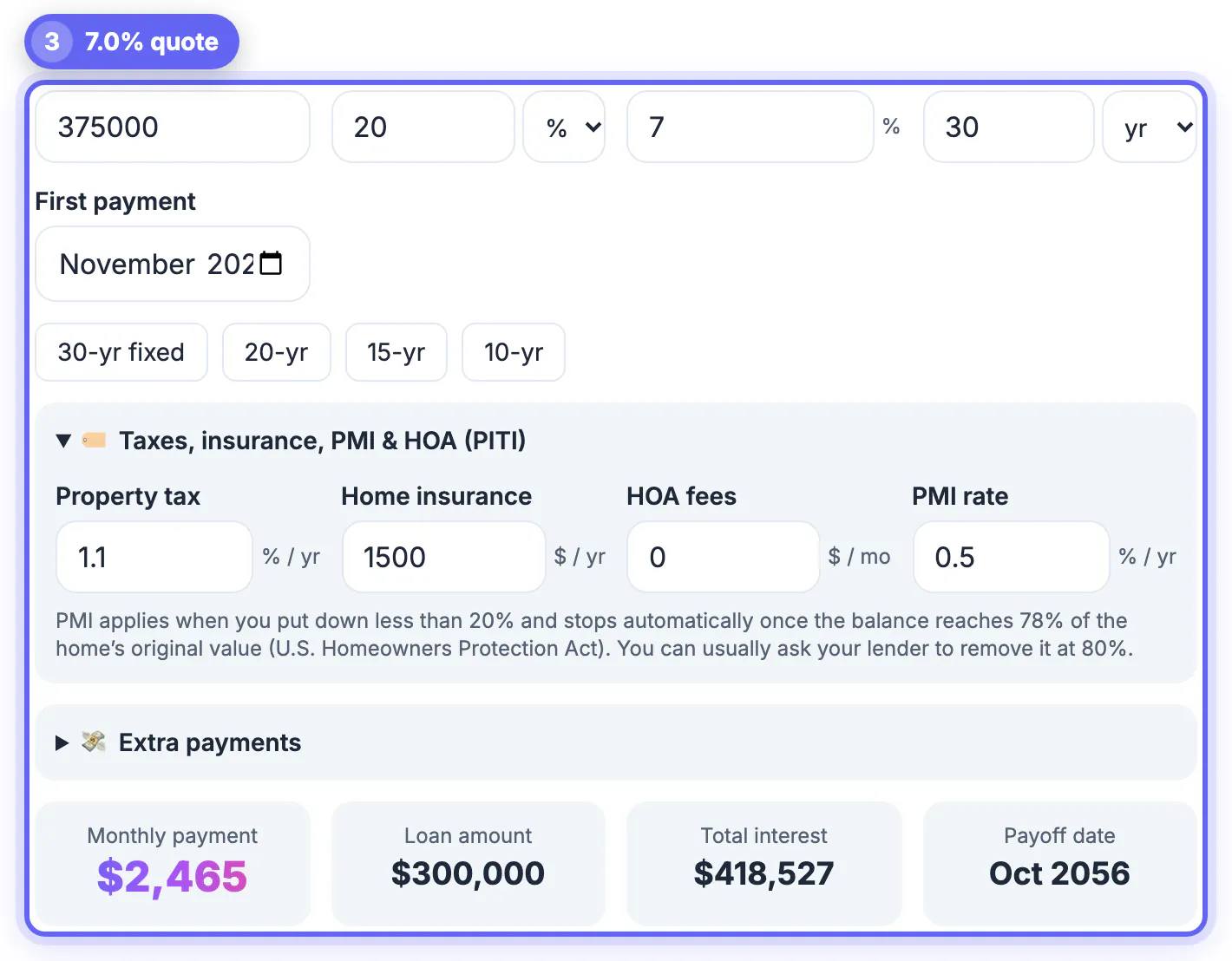
A mortgage payment calculator is most useful when you have two or three lender quotes and need to know which one is actually cheaper. On a $300,000, 30-year fixed loan, 6.0 percent costs $1,798.65 a month in principal and interest while 7.0 percent costs $1,995.91, a gap of $197 a month and about $71,000 of extra interest if you keep the loan to the end. This guide shows how to line up competing offers fairly: what each eighth or quarter of a point is worth, how to read the fee pages of a Loan Estimate, when paying discount points breaks even, and how to model the full monthly bill with taxes, insurance and PMI in GrabCast's free Mortgage and Loan Calculator. Rates in the examples are illustrations, not quotes; your own offers depend on credit, down payment and the day you lock.
🏠 Try the Mortgage Calculator tool now — freeOpen →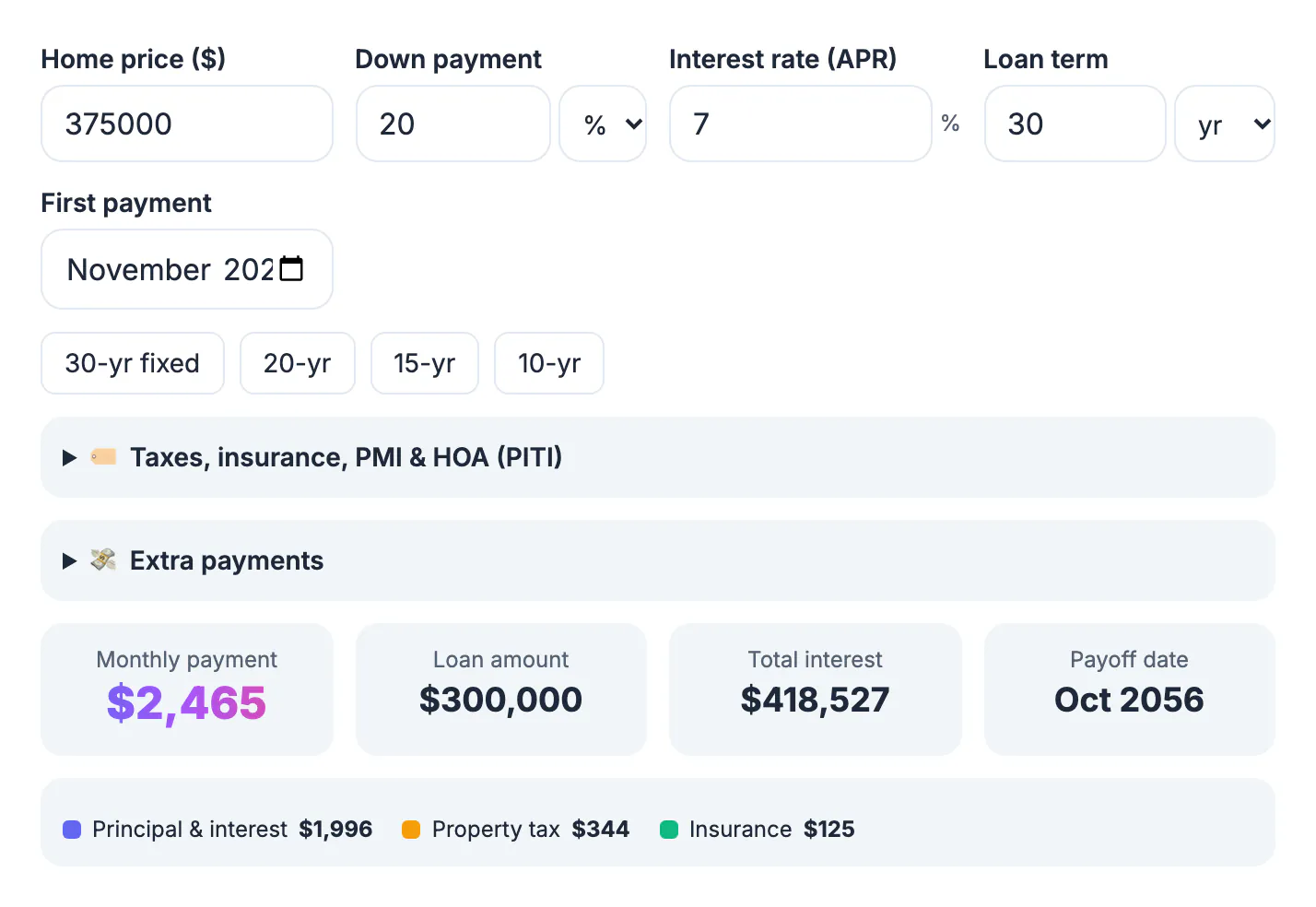
A mortgage is usually the largest and longest loan a household takes on, so small differences stretch across hundreds of payments. Yet many buyers accept the first quote because the paperwork is tiring and the rates look almost identical on paper. Research on mortgage shopping from the Consumer Financial Protection Bureau and Freddie Mac has found that borrowers who collect more than one quote tend to get a better rate, and the gap between lenders on the same day can be meaningful. The trouble is that quotes arrive in different shapes: one lender offers a lower rate with a point, another a higher rate with a lender credit, a third quotes an APR you cannot compare to the others. A calculator strips that down to what you will pay each month and in total over the years you expect to keep the loan, which is the only comparison that matters. It also shows the part of the bill that is not the loan at all, taxes, insurance and PMI, so you do not approve a payment that looks affordable until the escrow arrives.
What each rate step does to a mortgage payment
Hold the loan amount and term fixed and change only the rate. For a $300,000, 30-year fixed loan, principal and interest per month and total interest over the full term come out to:
- 6.000 percent: $1,798.65 a month, about $347,500 of interest.
- 6.250 percent: $1,847.15 a month, about $365,000.
- 6.500 percent: $1,896.20 a month, about $382,600.
- 6.875 percent: $1,970.79 a month, about $409,500.
- 7.000 percent: $1,995.91 a month, about $418,500.
Each quarter point is worth roughly $48 to $50 a month at this size. Few people keep a mortgage for 30 years, though, so look at a shorter window too. Over the first seven years, the 6 percent loan charges about $120,000 of interest and the 7 percent loan about $141,100, a $21,100 difference that you would pay even if you sell or refinance in year eight.
Compare Loan Estimates, not advertised rates
After you apply, each lender must send a standardized three-page Loan Estimate within three business days. Because every lender uses the same form, it is the fairest way to compare offers.
- Page 1, Loan Terms: the rate, the principal and interest amount and whether either can rise. Confirm every quote uses the same loan amount, term and loan type.
- Page 2, section A, Origination Charges: application and underwriting fees plus any discount points, the part of closing costs a lender controls most directly.
- Page 2, Lender Credits: a negative number that offsets closing costs, usually in exchange for a higher rate.
- Page 3, Comparisons: the In 5 Years figure shows total paid and principal paid off over five years, a useful single number when one quote has lower fees and another a lower rate.
- Page 3, APR and Total Interest Percentage: APR folds in certain fees, but it assumes you keep the loan for the full term, so it favors paying points more than most real borrowers should.
Ask each lender for a quote on the same day, since rates move daily, and note the lock period; a 60-day lock often costs more than a 30-day one.
Discount points and the break-even month
One discount point costs 1 percent of the loan amount and lowers the rate by an amount that varies by lender and market day. Divide the cost by the monthly saving to find how long it takes to earn the money back.
- Example: 1 point on $300,000 is $3,000. If it lowers the rate from 6.5 to 6.25 percent, the payment drops from $1,896.20 to $1,847.15, a saving of $49.05 a month.
- Break-even: $3,000 ÷ $49.05 is about 61 months, just over five years.
- If you expect to move, refinance or pay off the loan before then, the points cost more than they save.
- The reverse also works: a lender credit that covers $3,000 of closing costs in exchange for a quarter point higher rate pays off if you keep the loan less than about five years.
The simple division ignores what the $3,000 could earn elsewhere, so treat the break-even month as a slightly optimistic estimate.
Model the full bill in the free mortgage calculator
Principal and interest are only part of the payment. GrabCast's Mortgage and Loan Calculator adds the rest, so enter each quote the way you will actually pay it.
- Mortgage mode takes the home price, down payment in percent or dollars, rate, and a term in years or months, with presets for 30, 20, 15 and 10 years.
- Add property tax as a percent, homeowners insurance per year, HOA dues per month and a PMI rate for full PITI.
- Example: a $375,000 home with 10 percent down, a $337,500 loan at 6.5 percent, 1.1 percent property tax, $1,800 a year of insurance and 0.5 percent PMI comes to about $2,768 a month, of which $2,133 is principal and interest.
- PMI stops once the scheduled balance reaches 78 percent of the original price, in this example in month 109, a little over nine years in, and the tool shows that month and the total PMI paid.
- Extra payments can be tested monthly, once a year or as a one-time lump sum, and the full schedule downloads as CSV with a share link for each scenario.
The tool handles fixed-rate loans only, not adjustable-rate mortgages, and runs in your browser without storing what you type. Your lender's escrow figures may differ from these estimates.
To see how a mortgage fits your monthly budget, the Paycheck & Salary Calculator shows what you actually take home.
Step-by-step
Common mistakes to avoid
Pro tips
Frequently asked questions
How much does a quarter point change a mortgage payment
On a $300,000, 30-year fixed loan around 6 to 7 percent, each quarter point changes principal and interest by about $48 to $50 a month. Moving from 6.5 to 6.25 percent, for example, drops the payment from $1,896.20 to $1,847.15.
Should I compare the rate or the APR
Look at both, but decide on total cost over the time you expect to keep the loan. APR includes certain fees and assumes you keep the mortgage for its full term, which can make points look better than they are for someone who moves in six or seven years.
Are discount points worth it
They are worth it only if you keep the loan past the break-even month. Divide the cost of the points by the monthly saving. $3,000 that saves $49.05 a month breaks even after about 61 months.
Does the calculator include taxes, insurance and PMI
Yes. In Mortgage mode you can add property tax, homeowners insurance, HOA dues and a PMI rate. It stops charging PMI when the scheduled balance reaches 78 percent of the original price and shows the month that happens.
Can it handle an adjustable-rate mortgage
No. It models fixed-rate loans only. For an ARM, you can run the initial rate and a higher reset rate as two separate scenarios to see a range, but the tool will not model the adjustment schedule itself.
Get Loan Estimates from several lenders on the same day, keep the loan amount and term identical, and compare what each costs per month and over the years you will really keep the loan. Price discount points against their break-even month, then model the full PITI payment with PMI before you lock, so the number you approve is the number you will pay.
Related guides
Browse more: all calculator guides · the Mortgage Calculator tool