15-Year vs 30-Year Mortgage: The Real Cost Gap
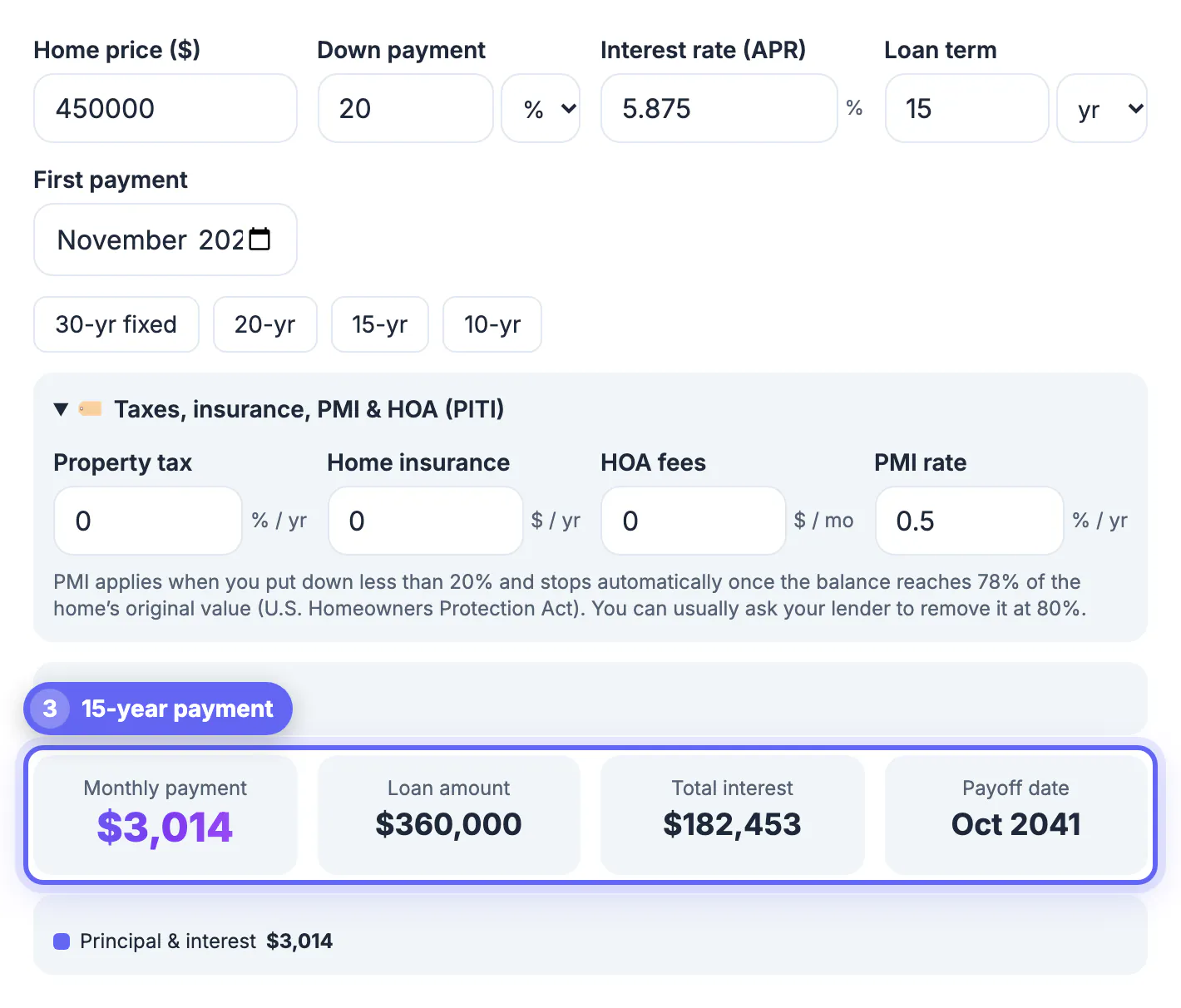
On a $360,000 loan, a 15-year mortgage at 5.875% costs about $3,014 a month, $738 more than the longer loan at 6.5%, yet it saves roughly $277,000 in interest. That is the whole 15-year vs 30-year mortgage trade-off in one line: a higher payment now in exchange for a much cheaper loan. Which one is right depends on how steady your income is, what else you would do with the $738, and how much flexibility you want if life changes. The figures below use typical rate spreads so you can see how the gap actually plays out.
🏠 Try the Mortgage Calculator tool now — freeOpen →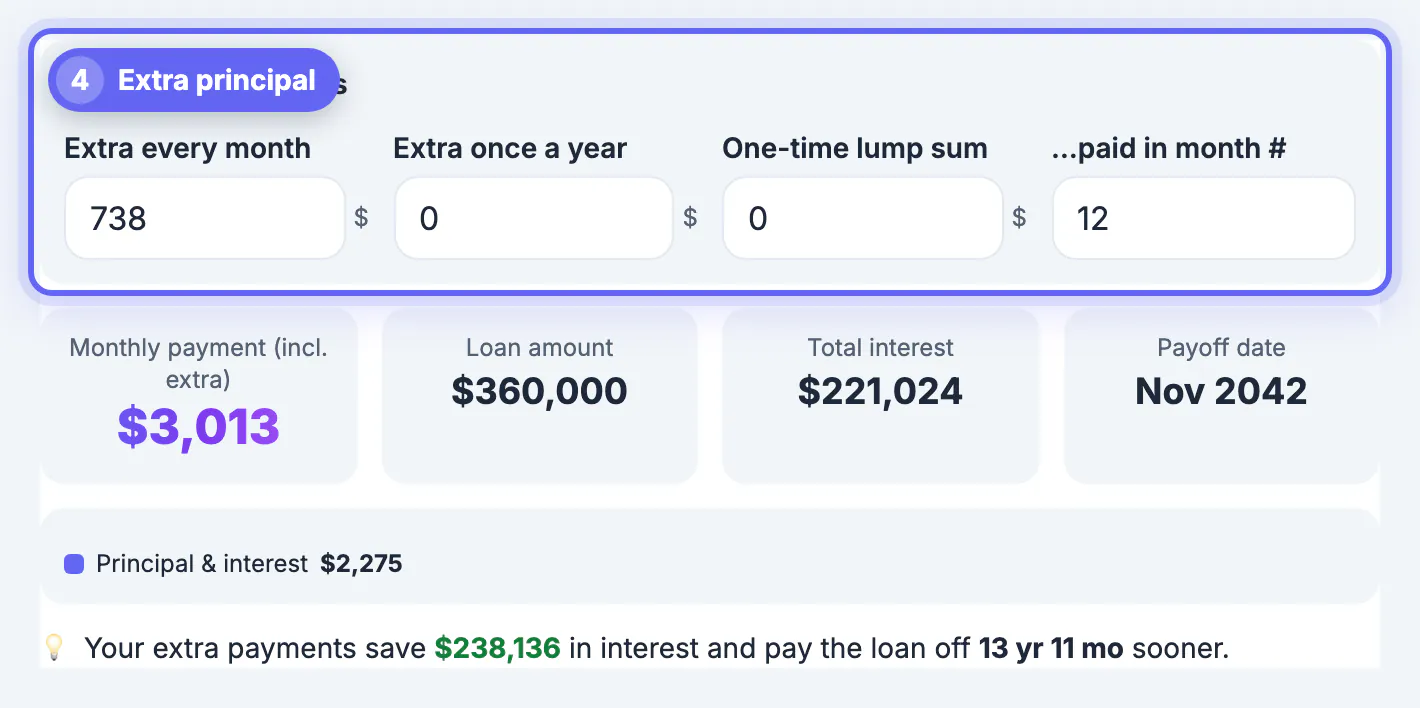
Buyers often shop hard for a quarter point on the rate and then pick a term almost by default. The term changes two things at once. A shorter loan spreads the balance over half as many payments, and lenders usually price 15-year loans roughly half a point to three quarters of a point lower because they carry less risk. Both effects cut interest. The price is a larger required payment that you must make every month, in good years and bad, which is why the decision is about cash flow resilience, not only about total interest.
15-year vs 30-year mortgage side by side
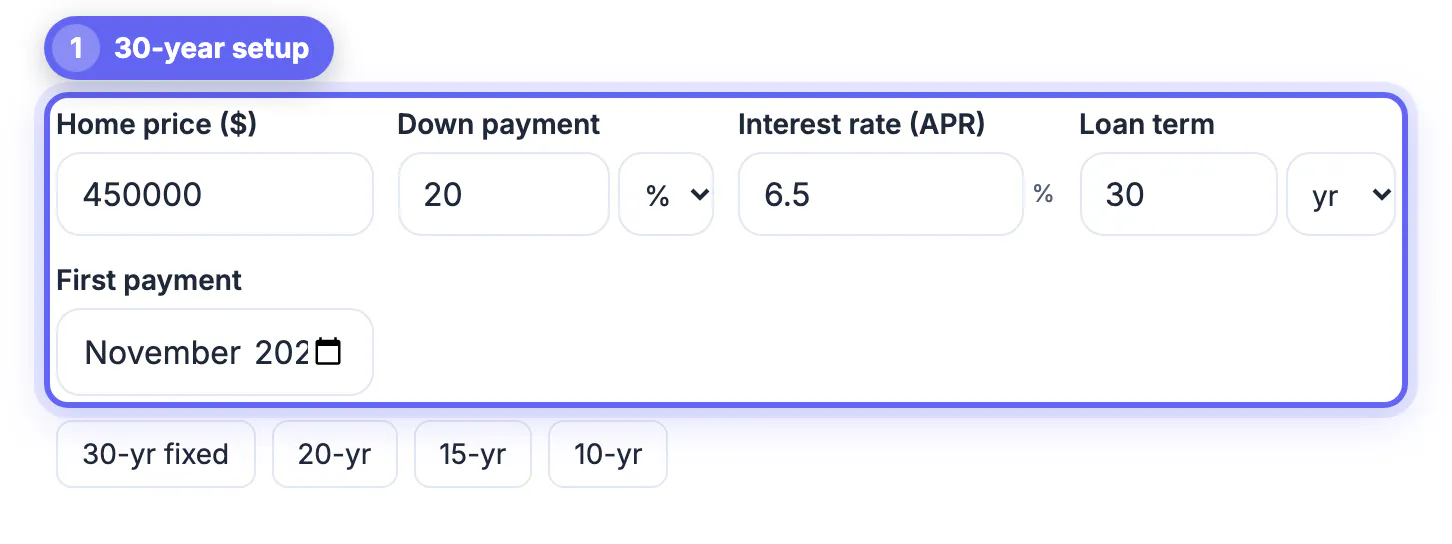
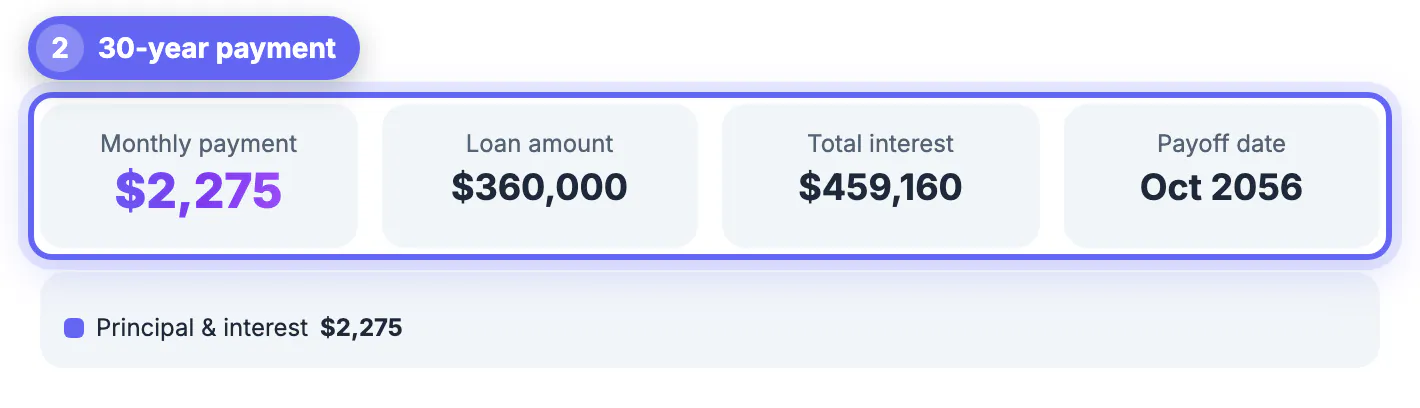
Here is one $360,000 loan, for example a $450,000 home with 20% down, compared at realistic rates. Property tax and insurance are identical for both terms, so they are left out of the comparison.
- Long term at 6.5%: $2,275 a month, about $459,160 in total interest
- Short term at 5.875%: $3,014 a month, about $182,450 in total interest
- Difference: $738 more per month for the short loan, about $276,700 less interest
- Middle ground, a 20-yr loan at 6.125%: $2,605 a month, about $265,240 in interest
- The short term at the higher 6.5% rate would be $3,136 a month, which shows how much of the saving comes from the lower rate
The shorter loan does not just save interest at the end. It builds equity fast from day one, which matters if you plan to sell or tap equity within a decade.
Equity and payoff over time
At the five-year mark the long-loan borrower still owes about $337,000, having paid down only $23,000. The short-loan borrower owes about $273,000, roughly $64,000 less. By the time the short loan is gone, the other still has about $261,000 left.
- Faster equity gives you a bigger cushion if prices dip before you sell
- More equity means better terms on a future home equity loan or refinance
- A paid-off home by your fifties or sixties lowers the income you need in retirement
- The longer loan keeps more cash in your pocket today, which can fund savings, childcare or a business
The case for the longer loan plus investing
A common argument is to take the longer loan and invest the $738 difference. Whether it wins depends on the return. Invested monthly at 7% until the short loan would be paid off, $738 grows to about $234,000, slightly less than the $261,000 still owed on the long loan at that point. At higher long-run returns that strategy can pull ahead, and at lower returns it falls further behind.
- It only works if you actually invest the difference every month, which many people do not
- Investment returns are not guaranteed, while interest avoided on a mortgage is
- Market money is liquid in an emergency; home equity is not
- Taxes matter: mortgage interest is deductible only if you itemize, and investment gains can be taxed
There is also a hybrid: take the long loan but pay it like the short one. Paying $3,014 a month on the 6.5% loan retires it in 193 payments with roughly $221,000 of interest. You keep the right to drop back to $2,275 in a tight month, and that flexibility costs about $38,500 compared with the true short-term loan.
Who each term fits best
Neither term is universally better. Match the loan to your income stability, your other goals and your timeline in the house.
- Choose the short term if your income is stable, your emergency fund is full, retirement saving is on track and the higher payment stays under about 28% of gross income
- Choose the long term if you are early in your career, have variable income, carry other debts or need the lower payment to qualify at all
- Consider a 20-yr loan if the higher payment feels tight but you still want to be debt-free sooner
- Remember the higher payment raises your debt-to-income ratio, which can reduce the price a lender will approve
Test both terms in the Mortgage Calculator, and check the payment against your take-home pay with the Paycheck & Salary Calculator.
Step-by-step
Common mistakes to avoid
Pro tips
Frequently asked questions
How much more is a 15-year mortgage per month
On a $360,000 loan it is about $738 more with typical rates, roughly 32% higher than the 30-year payment. The gap grows with the loan size and shrinks when rates are low.
Are 15-year mortgage rates always lower
Usually. Lenders take less risk over a shorter term, so 15-year rates tend to run about half a point to three quarters of a point below 30-year rates, though the spread varies.
Is it smarter to take a 30-year and pay extra
It gives flexibility, since you can pause extra payments. You pay the higher 30-year rate, though, so the total interest will be somewhat higher than a true 15-year loan.
Can I switch from a 30-year to a 15-year later
Only by refinancing, which means new closing costs and whatever rates are available then. Adding extra principal is a cheaper way to shorten the loan you already have.
Does the loan term change property tax or insurance
No. Escrow costs depend on the home and location, so they are the same for both terms; only principal and interest change.
A 15-year mortgage costs more each month but saves a fortune in interest and builds equity fast, while a 30-year buys flexibility; compare both at real quoted rates, test the 30-year with extra principal, and pick the payment you can make every month without strain.
Related guides
Browse more: all calculator guides · the Mortgage Calculator tool