How Much House Can I Afford? The 28/36 Rule, Done
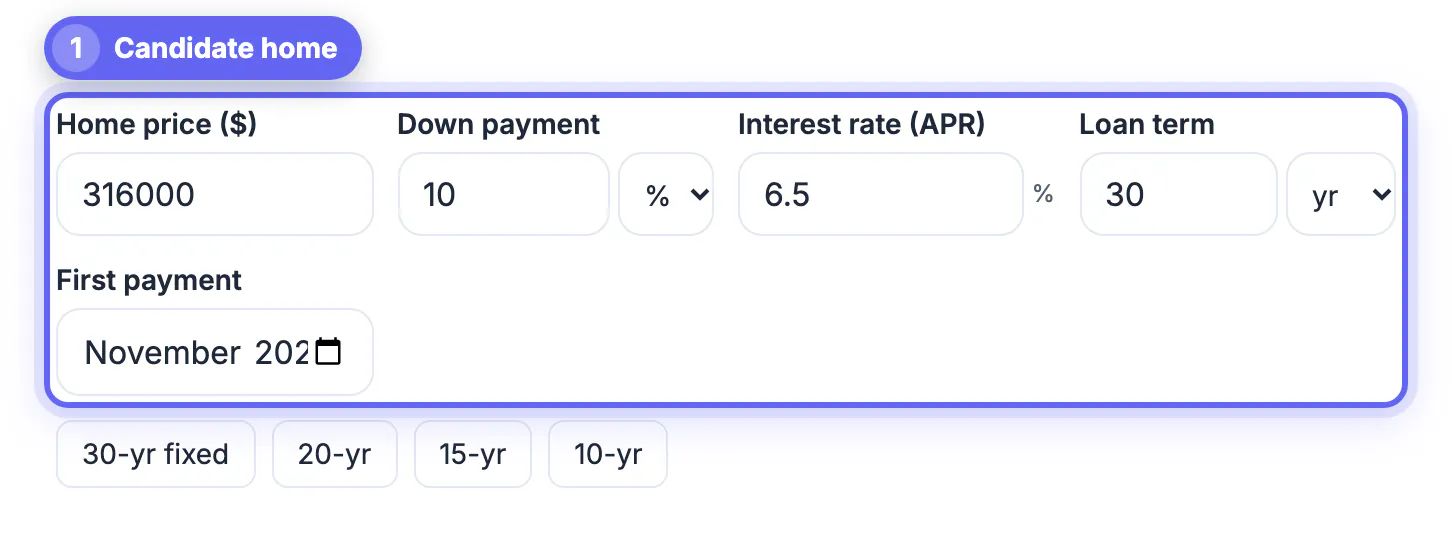
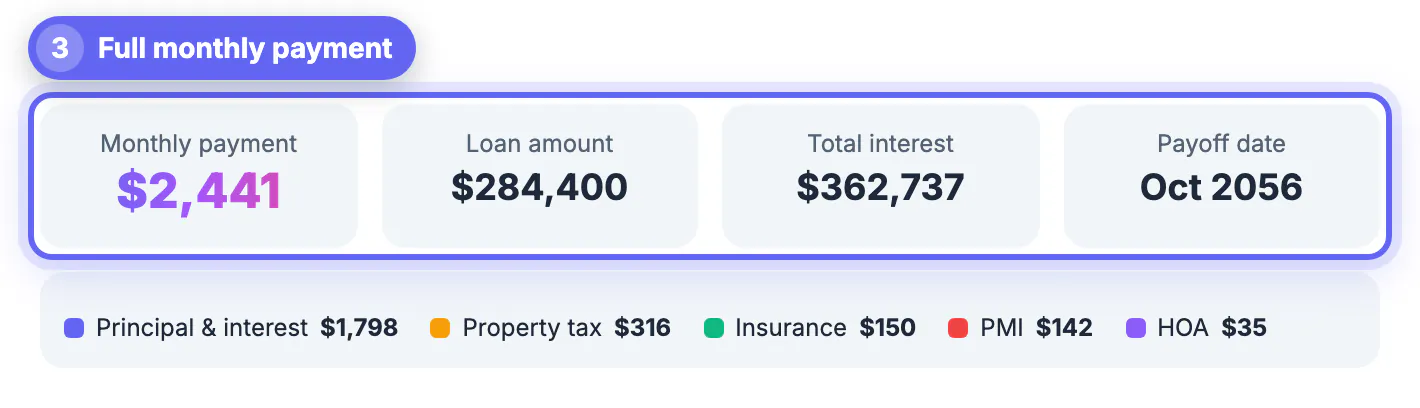
On a $100,000 household income with $600 a month of other debt, most lenders would cap your full housing payment near $2,333, which buys roughly a $316,000 home at 6.5% with 10% down. That single sentence hides four moving parts: income, existing debts, the full monthly cost of owning, and the cash you bring to closing. This guide walks through how much house you can afford the way an underwriter does, then shows how to stress-test the number so the payment still feels comfortable in year five, not just on closing day.
🏠 Try the Mortgage Calculator tool now — freeOpen →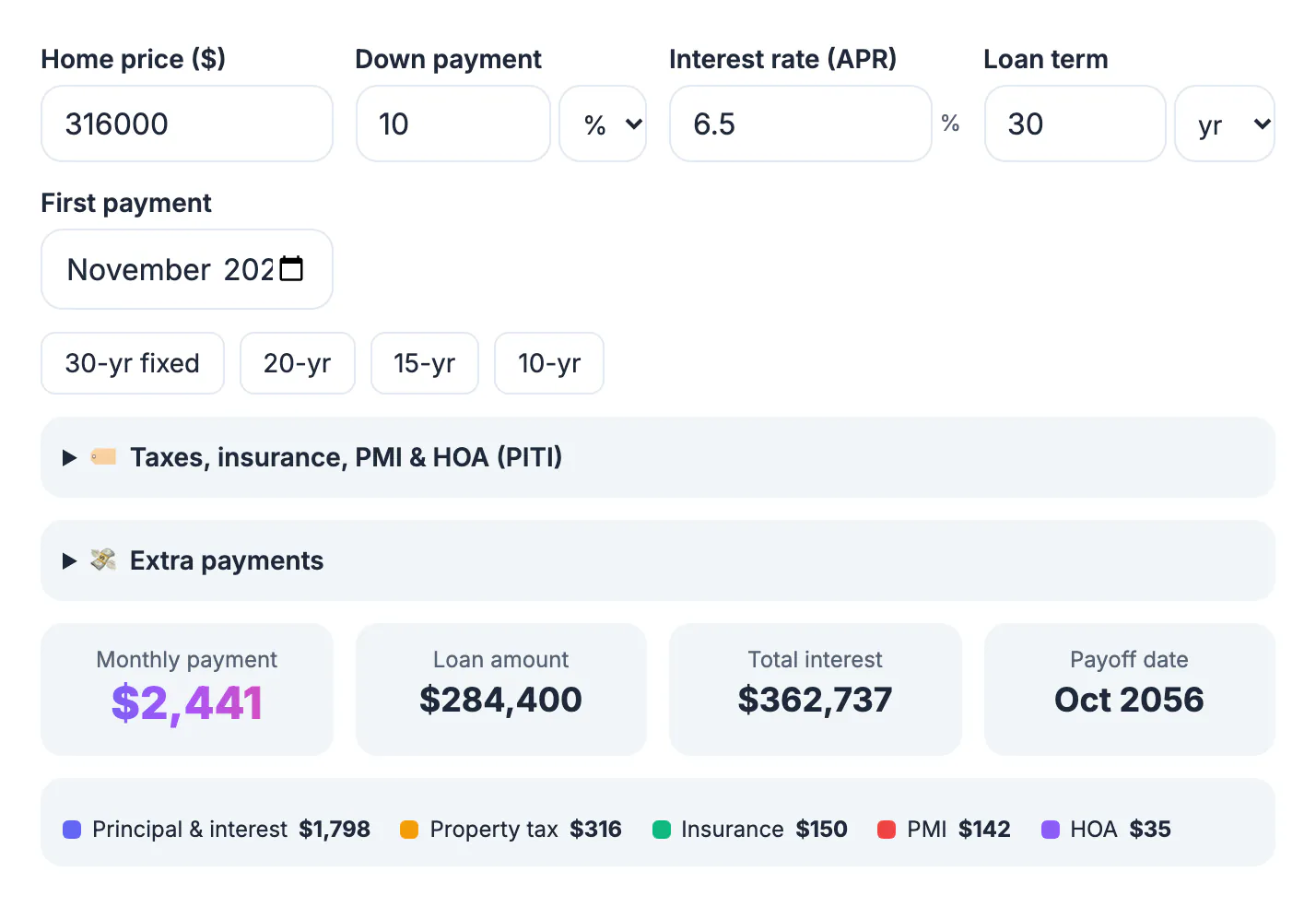
Listing sites sort homes by price, but your budget is really a monthly number. Two houses at the same price can differ by several hundred dollars a month because of property tax rates, insurance, homeowners association dues and mortgage insurance. Starting from what you can pay each month, and working backward to a price, keeps you from falling in love with a home that only works on paper. It also gives you a firm answer when a lender preapproves you for far more than you planned to spend, which happens often because approval limits are ceilings, not recommendations.
The 28/36 rule in plain numbers
The classic affordability guideline has two tests. Your housing payment, including principal, interest, property tax, insurance, mortgage insurance and HOA dues, should stay under 28% of gross monthly income. Your housing payment plus every other monthly debt should stay under 36%. Whichever limit is lower wins.
- Gross monthly income: $100,000 divided by 12 is about $8,333
- Front-end limit: 28% of $8,333 is $2,333 for housing
- Back-end limit: 36% of $8,333 is $3,000 for all debts
- Existing debts: a $400 car loan plus $200 of student loans is $600
- Room left under the back-end test: $3,000 minus $600 is $2,400, so the $2,333 front-end cap is the binding one
Many lenders will approve a back-end ratio of 43% or even close to 50% with strong credit and savings. That is a qualification ceiling. The 28/36 pair is a comfort target, and the gap between the two is where house-poor budgets are born.
Turn a monthly budget into a home price
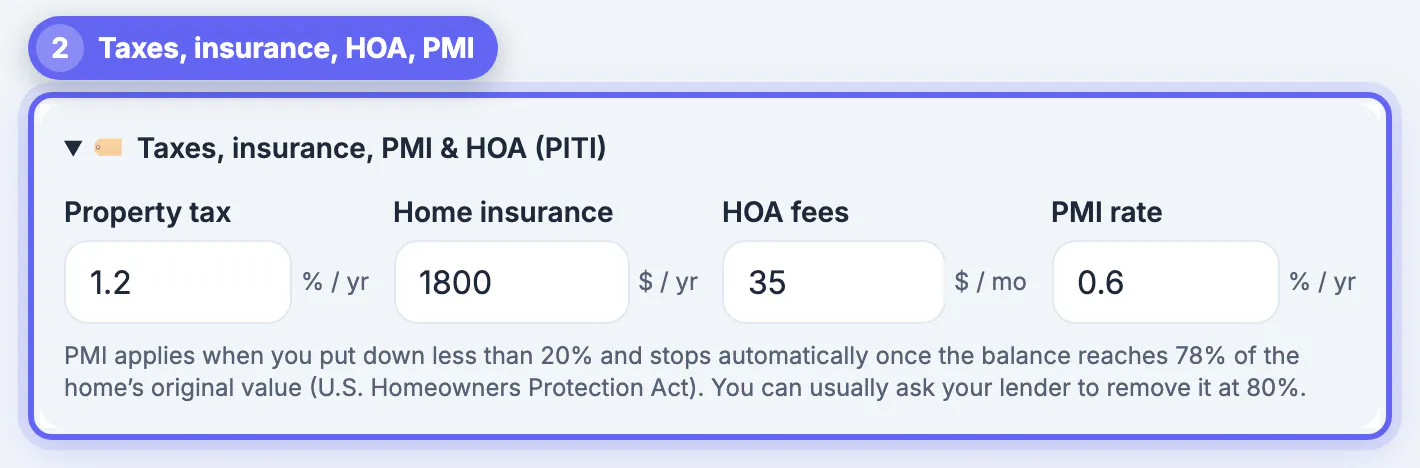
Once you know the payment you can carry, you need the price that produces it. Using a 30-year loan at 6.5%, a 1.1% property tax rate, $1,500 a year of homeowners insurance and 0.5% PMI, a $2,333 monthly budget supports these prices:
- 10% down: about $316,000, with roughly $1,799 principal and interest, $290 tax, $125 insurance and $119 PMI
- 20% down: about $370,000, because PMI disappears and a larger share of the payment goes to the loan
- 5% down: about $302,000, since a bigger loan and PMI eat into the same budget
- At 5.5% instead of 6.5%, the 10%-down price rises to about $345,000; at 7.5% it falls to about $291,000
Rate moves matter more than most buyers expect. A one-point change in the rate shifts affordable price by roughly $25,000 to $30,000 on this income, which is why locking a rate at the right time can matter as much as negotiating the price.
Debts count toward the 36 side, and the Auto Loan Calculator shows a car payment. For take-home pay, the Paycheck & Salary Calculator helps.
Hidden costs that shrink what you can afford
The payment is not only principal and interest. The escrow items and fees attached to a specific property can move your affordable price more than the house itself.
- Property tax: a home in a county charging 2.2% instead of 1.1% drops the same budget from about $316,000 to about $280,000
- HOA dues: a $250 monthly association fee lowers the price to roughly $281,000, because every dollar of dues is a dollar not available for the loan
- Insurance: coastal, wildfire and hail regions can double premiums, so get a real quote before you offer
- PMI: usually 0.3% to 1.5% of the loan per year on conventional loans with less than 20% down; FHA loans charge their own mortgage insurance premium instead
- Maintenance: budget about 1% to 2% of the home value per year for repairs, which does not show up in any lender ratio
Cash to close and the cushion you keep
Affordability is also a cash question. Beyond the down payment, closing costs typically run 2% to 5% of the loan amount for lender fees, title insurance, appraisal, prepaid taxes and insurance. On a $284,000 loan that is roughly $5,700 to $14,200 on top of the down payment.
- Down payment options: conventional loans can start at 3%, FHA at 3.5%, and VA and USDA loans can require nothing down for eligible buyers
- Keep reserves: lenders like two to six months of payments in the bank after closing, and so should you
- Moving and furnishing: a few thousand dollars disappears in the first month for movers, window coverings and appliances
- Do not drain retirement accounts to hit 20% down if it leaves you with no emergency fund
A slightly cheaper home with a healthy cash cushion is almost always safer than stretching to the maximum and closing with an empty savings account.
Step-by-step
Common mistakes to avoid
Pro tips
Frequently asked questions
How much house can I afford on a $75,000 salary
With no other debts, 28% of $6,250 a month is $1,750 for housing. At 6.5% with 10% down, 1.1% tax and typical insurance, that supports a home around $233,000, or about $272,000 with 20% down.
Does the 28/36 rule use gross or take-home pay
Gross pay, before taxes and deductions. Because take-home pay is lower, many buyers set their personal target at 25% of gross or around a third of take-home to leave room for savings.
What debts count toward the 36% limit
Recurring obligations on your credit report and court-ordered payments: auto loans, student loans, minimum credit card payments, personal loans and child support. Utilities, groceries and subscriptions do not count, though they still come out of your budget.
Can I get approved above 36%
Often, yes. Many programs allow back-end ratios of 43% to 50% with strong credit or reserves. Approval shows what a lender will risk, not what keeps your monthly life comfortable.
Does the calculator send my income or numbers anywhere
No. The Mortgage Calculator does its math in your browser, so the prices, rates and payments you try stay on your device and there is no sign-up.
Work backward from a monthly payment, not a price: cap housing near 28% of gross income and all debts near 36%, price in tax, insurance, PMI and HOA, keep a cash cushion after closing, and let the calculator translate that budget into a home price you can live with.
Related guides
Browse more: all calculator guides · the Mortgage Calculator tool