Free Trials, Signed Up Safely: Cards, Renewals and Inboxes
To sign up for free trials safely, sort them into two kinds before you type anything: no-card trials, where a throwaway inbox can keep the follow-up marketing out of your life, and card-on-file trials, where your real email must receive the renewal warning and the cancellation receipt. Mixing those up is how people end up paying for a year of software they meant to test for a week. This guide gives you a simple checklist for each kind, shows where GrabCast's Temporary Email tool fits and where it does not, and draws a firm line around one-trial-per-person rules.
🎟️ Try the Temporary Email tool now — freeOpen →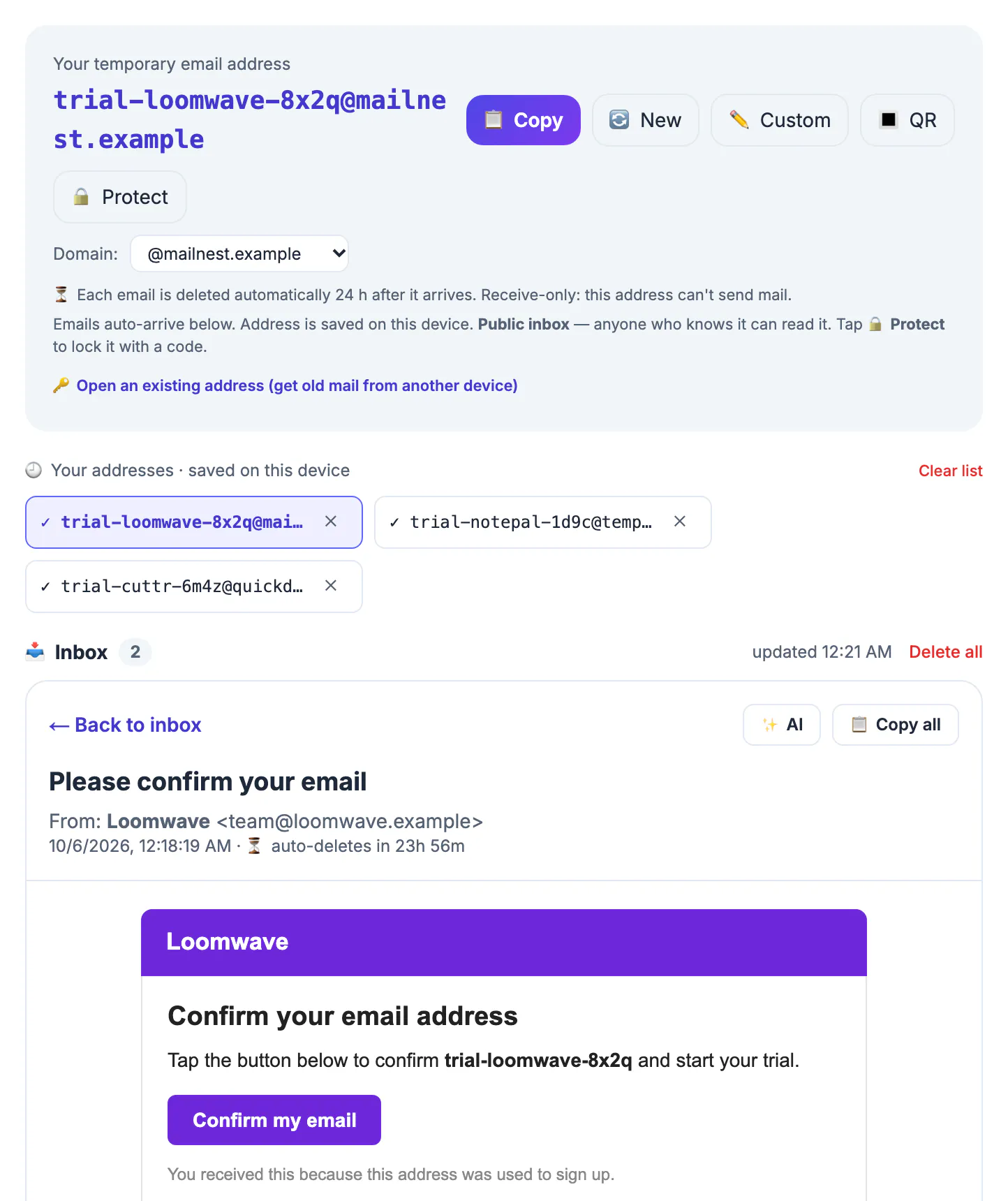
A trial is a sales funnel: the company gets your contact details and a window to convince you. When no payment is involved, the only cost of handing over your main address is years of nurture emails. When a card is attached, the same address becomes the channel for billing notices, and losing access to it can cost real money. Choosing the right address up front protects both your attention and your wallet.
Two kinds of trials, two different rules
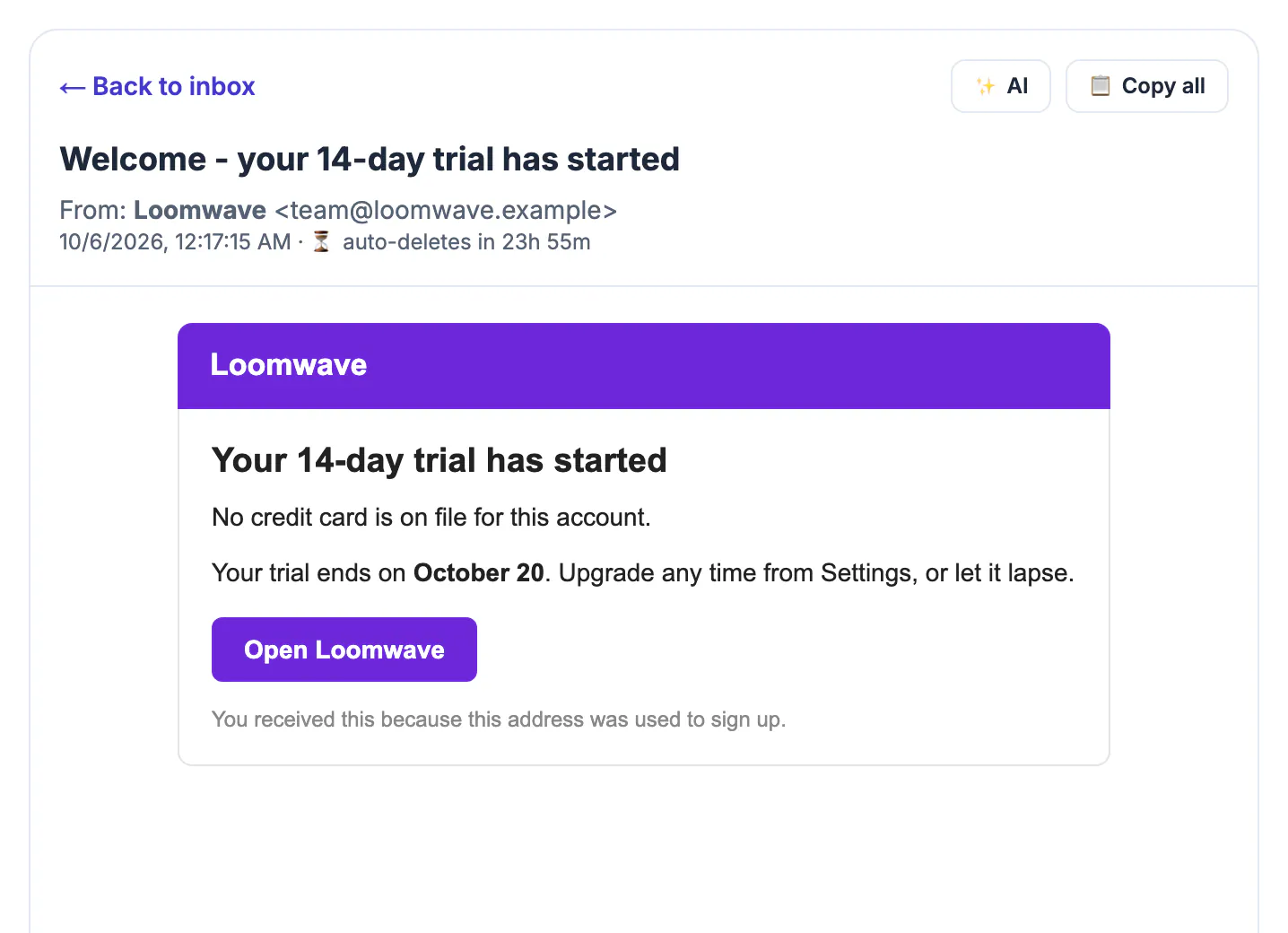
No-card trials let you explore a product with only an email and maybe a name: a design app's seven-day pro tier, a stock-photo site's ten free downloads, a note app's team features. Nothing renews automatically because nothing can be charged. Here a throwaway is a reasonable privacy choice if you are genuinely evaluating and have not used a trial there before.
Card-on-file trials are different. Streaming services, meal kits, VPNs, dating apps and many software subscriptions ask for payment details up front and start billing on day 8, 15 or 31 unless you cancel. The company will email the trial-ending reminder, the first invoice and the cancellation confirmation. GrabCast deletes throwaway messages about 24 hours after they arrive, so a reminder sent on day 6 would land in a mailbox you have long abandoned. For any trial with a card, use your real account, or a forwarding alias that lands in it.
- No card, one-time evaluation: throwaway inbox is fine.
- Card required, auto-renews: real email or a forwarding alias, always.
- You already used a trial on that service: do not start another under a new address.
Signing up with a throwaway, step by careful step
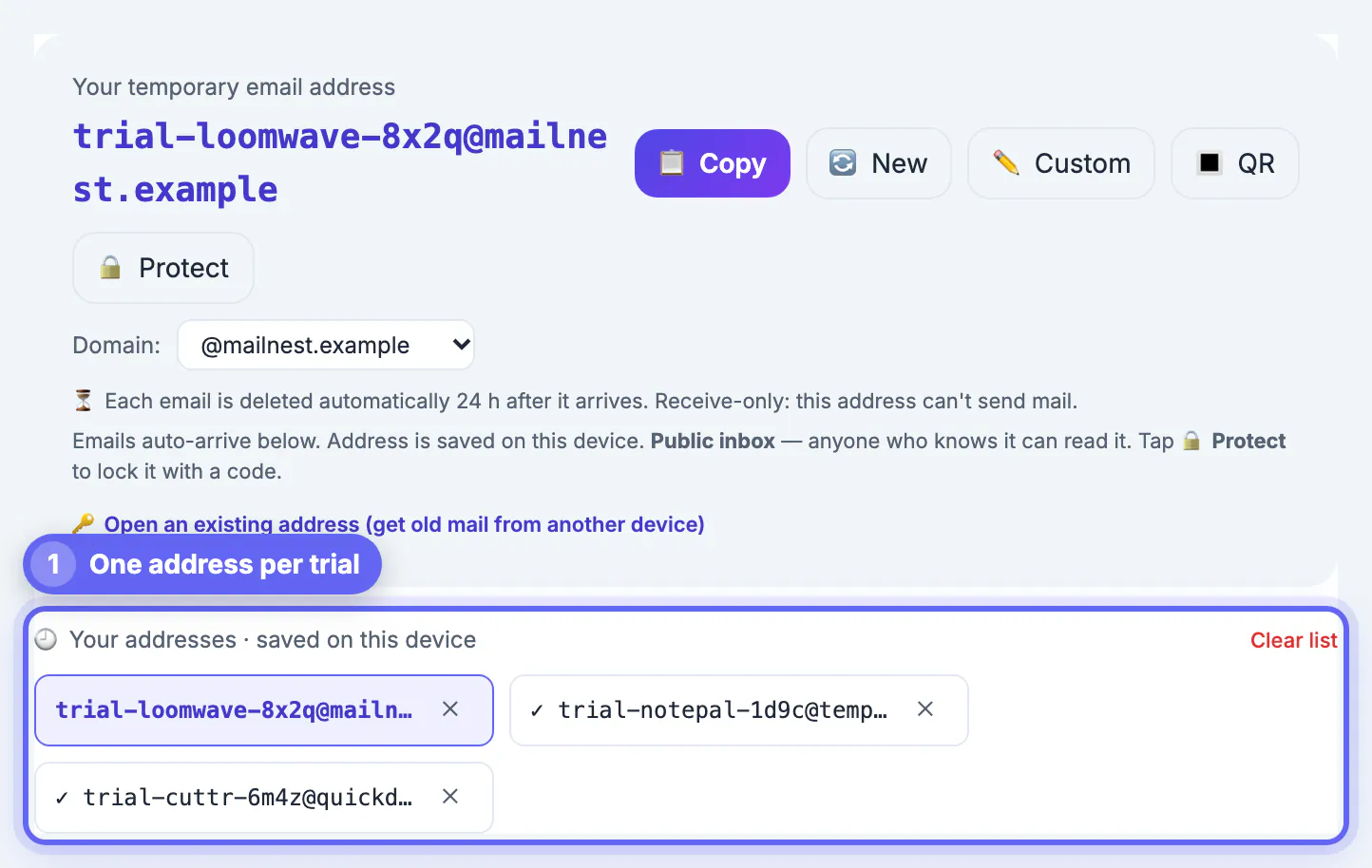
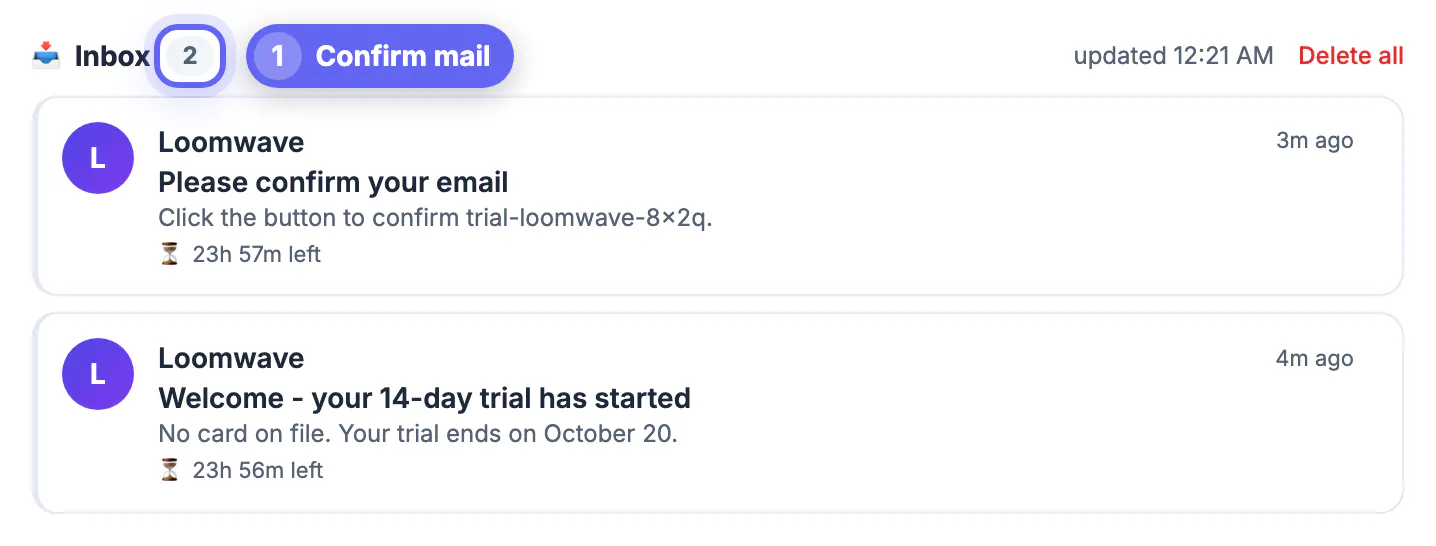
Open the Temporary Email tool, copy the generated name, and paste it into the trial form. Leave the tab in front; the page checks for new messages every 12 seconds and highlights any one-time code it finds so you can copy it in one tap. Confirm the account, then note on paper or in your password manager which service uses which throwaway, because the recent list lives only in that browser on that device.
During the form, untick every marketing checkbox anyway. Some companies share or sell lists to partners, and some sign-ups also ask for a phone number; skip optional fields you do not need. If you like the product enough to keep it, change the account's email to your real one in settings before the day ends, while the confirmation for that change can still reach the throwaway. After roughly 24 hours those messages are gone.
Keeping card-on-file trials from surprising you
Put the cancellation deadline in your calendar the moment you sign up, set for two days before the stated end so time zones and billing cutoffs cannot bite. Read the terms screen for the exact renewal price and billing interval; an annual plan that renews at full price is a very different risk from a monthly one. Some banks and card issuers offer virtual card numbers that you can lock or delete, which adds another layer of control.
When you cancel, save proof. Take a screenshot of the confirmation screen and keep the confirmation message in your real inbox. Rules on renewals vary by place: several US states, including California, have automatic-renewal laws requiring clear disclosure and a straightforward way to cancel online, and EU consumers generally have a 14-day withdrawal right for many online contracts, with exceptions for digital content you have already started using. Those protections are much easier to use when you have the paper trail.
- Calendar reminder two days before the trial ends.
- Screenshot of the plan, price and renewal date at sign-up.
- Cancellation confirmation saved in your permanent mailbox.
Where to sign up safely with your real email instead
A throwaway is a privacy tool, not a way to reset a company's limits. Most services allow one trial per person or household, and creating fresh addresses to claim trial after trial typically breaks their terms of service; combined with misrepresented payment or identity details it can cross into fraud. Companies also link accounts through payment cards, devices and IP addresses, so it often fails anyway and can get every account closed.
Use your main address, or an alias from Apple Hide My Email, Firefox Relay, DuckDuckGo Email Protection or SimpleLogin that forwards to it, whenever the trial involves a payment method, stores work you will want to keep, gives access to health, financial or school services, or might turn into a long-term subscription. The alias still hides your real address from the company and can be switched off later, but unlike a throwaway it will deliver the billing notice you actually need.
Whichever address you choose, give each trial its own password; this guide to creating a strong password helps. The Password Breach Checker is a handy follow-up for older logins.
Step-by-step
Common mistakes to avoid
Pro tips
Frequently asked questions
Is it okay to use a temporary email for a free trial?
For a single no-card trial you are genuinely evaluating, yes. For trials that require a card, use your real email or an alias so billing notices reach you.
Can I use new throwaway addresses to get another trial?
No. Most services limit trials to one per person, and repeat sign-ups under new addresses typically break their terms. Buy the plan or pick a different product.
What happens to the account after the throwaway expires?
The account still exists, but its messages, including any password reset, go to a mailbox that empties after about a day. Move the account to a permanent email if you want to keep it.
Will I get a reminder before I am charged?
Many companies send one, and some jurisdictions require clear renewal disclosures, but do not rely on it. Put your own reminder in your calendar.
Does a throwaway stop the company from tracking me?
Only by email. Cards, devices, IP addresses and cookies can still identify you, so treat it as spam control, not anonymity.
Use a throwaway only for one-time, no-card trials you are honestly evaluating; route anything with a payment method to your real email or an alias, set your own cancel reminder, keep proof of cancellation, and never recycle addresses to claim repeat trials.
Related guides
Browse more: all all guides · the Temporary Email tool