Temporary Email Safety and Legal Limits, Explained
Using a temporary email to protect your privacy is generally legal in the US and the EU, and it is reasonably safe for low-stakes, same-day messages, as long as you remember that the mailbox is public by design and short-lived. What is not legal is using it to do something that would be illegal anyway, such as fraud or harassment, and what is not safe is sending anything sensitive to it. This article separates the legal question from the safety question, explains where a website's own rules fit in, and walks through the specific risks of GrabCast's tool. It is general information, not legal advice for your situation.
⚖️ Try the Temporary Email tool now — freeOpen →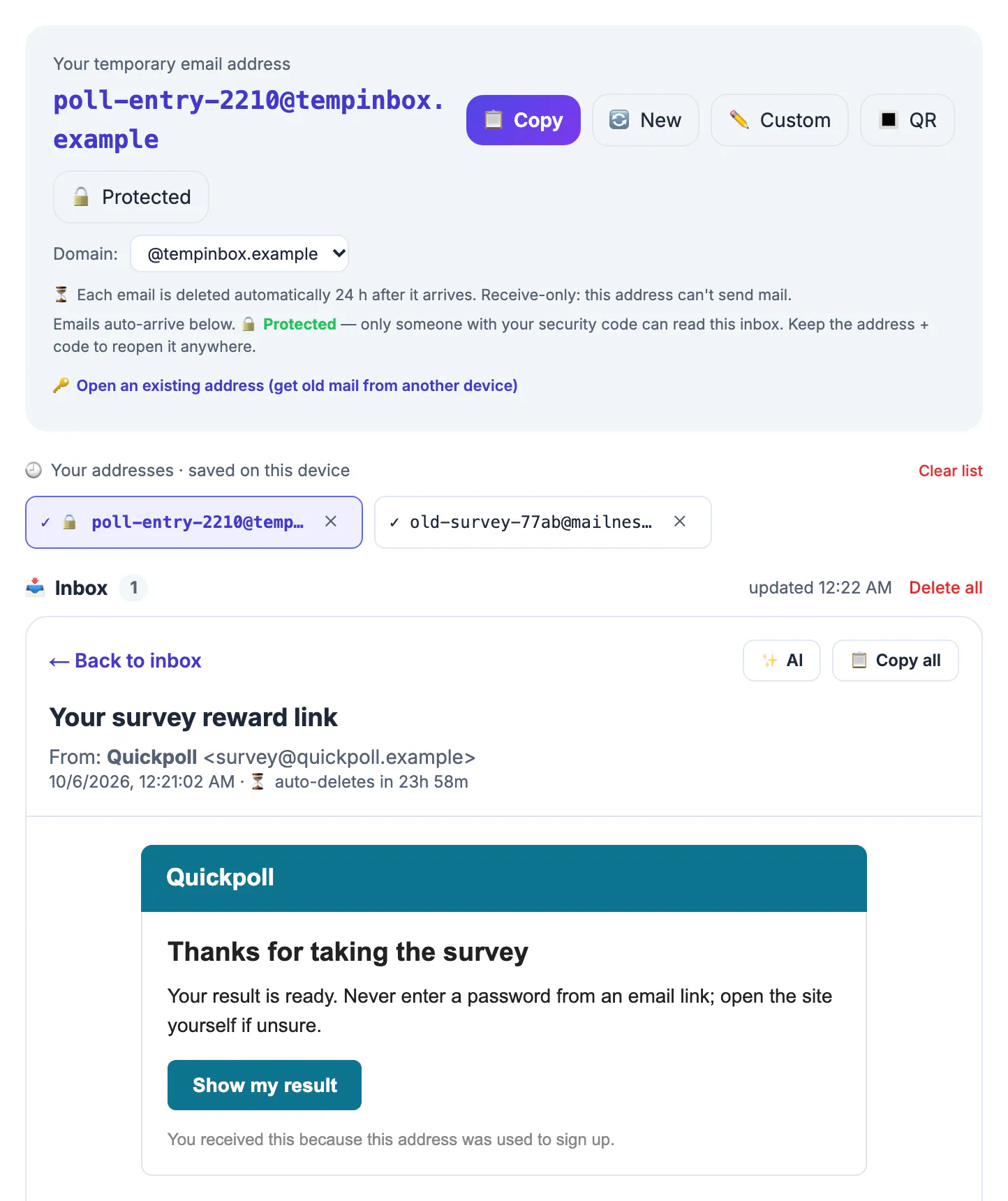
People often hear that a site banned throwaways and assume that makes them illegal, or hear that they are legal and assume that makes them safe. Legality is about laws, terms are about a contract with one company, and safety is about who can read your mail. Keeping those three apart makes the right choice obvious in almost every case.
The legal picture, with honest caveats
In the United States there is no general law against receiving mail at a disposable or pseudonymous address. The main federal email statute, the CAN-SPAM Act, regulates people who send commercial messages, not recipients. In the EU, data protection law such as the GDPR is built around limiting how much personal data companies collect, and choosing not to share your main address fits that spirit rather than conflicting with it. Other countries have their own rules, so check locally if you are unsure.
The tool does not change the legality of what you do with it. Fraud, identity misrepresentation to obtain money or services, harassment, threats, evading a court order or ban you are legally bound by, and creating fake accounts to manipulate reviews or votes remain unlawful or actionable whether the address is permanent or throwaway. A disposable address also offers little real anonymity: services and their hosting providers typically log connections, and law enforcement can request records through legal process.
Website terms are a separate question
A service can lawfully refuse throwaway domains, require a verified address, or close accounts that break its terms. Those are contract rules between you and that company. US courts have generally been reluctant to treat a bare terms-of-service violation as a computer crime, but the practical consequences are real: lost access, cancelled orders, forfeited credits. Using throwaways to claim repeated free trials, stack new-customer discounts or return after a ban usually violates those terms, and when payment or identity details are misrepresented it can become fraud.
- Legal and within terms: a throwaway for a gated download on a site that accepts it.
- Legal but against terms: a throwaway where the site says a verified personal address is required; expect the account to be closed.
- Not acceptable: any use meant to deceive for money, evade enforcement or harm someone.
Is temporary email safe? The real risks
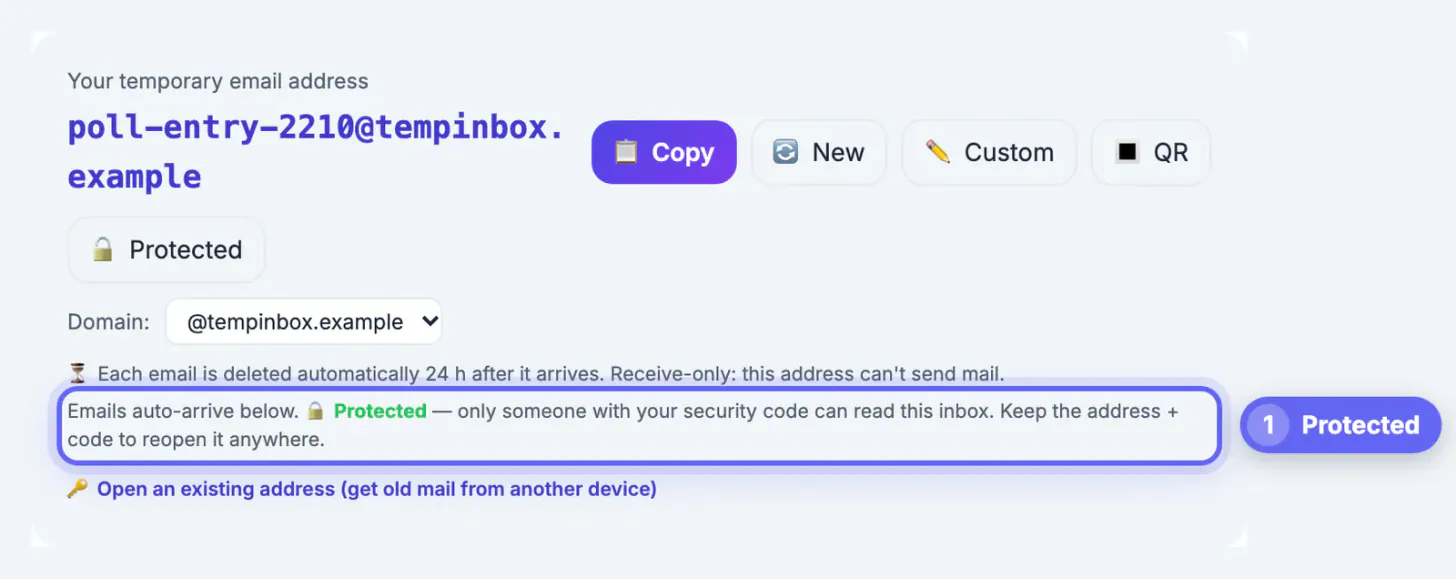
Safety depends on what you send there. On GrabCast's shared domain, anyone who types the exact name can read the mailbox unless you press Protect and set a security code of at least four characters. The service stores messages on its servers for about 24 hours, so, as with any mail provider, the operator can technically access them in that window. Treat the mailbox as a postcard: fine for a download link, wrong for bank statements, medical results or ID scans.
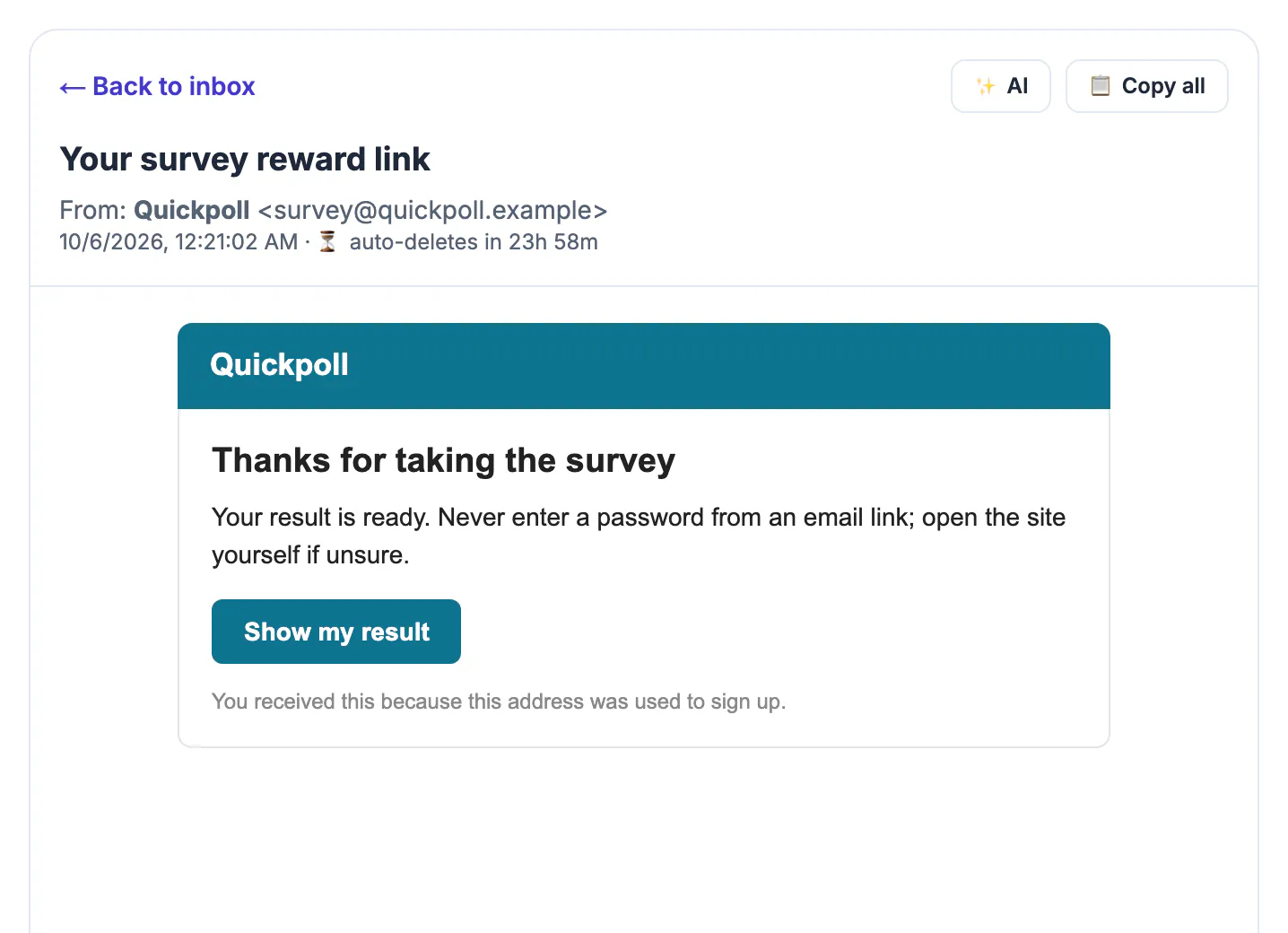
Phishing is the second risk. Throwaways attract junk, and a message can claim to be from a bank or delivery company. The viewer renders HTML inside a sandboxed frame that blocks scripts, and attachments are stripped before storage, which removes one common malware route. Images inside HTML messages can still load, though, so a sender may learn that the message was opened, and links still lead wherever they lead. Do not enter passwords or card numbers on a page you reached from a throwaway message.
- Optional AI button: it sends the message text to a cloud AI service to produce a summary and a Low, Medium or High phishing rating. Useful as a second opinion, not proof, and not for private content.
- Recovery: there is no password reset for the mailbox; losing the name or code means losing access.
- Shared devices: the name and any security code are saved in that browser, so on a borrowed computer use Clear list and also clear the site's browser data, which removes saved codes.
Safety applies to the tools you use too, and this checklist for free online tools shows what to check. For accounts that matter, use a unique password from the Password Generator.
Where a real inbox is required
Some uses are not illegal but are unwise enough that the answer is simply no. Use your permanent, password-protected account for banking and investing, taxes and government services, health and insurance portals, employers and schools, housing and utilities, legal matters, password managers and any account holding payment details or files you care about. These relationships depend on recovery, long-term records and reliable delivery, which a throwaway cannot offer.
For the gray zone of shops, newsletters and apps you might keep, a forwarding alias from Apple Hide My Email, Firefox Relay, DuckDuckGo Email Protection or SimpleLogin gives most of the privacy benefit with a normal level of safety. Keep the throwaway for what it does best: a single, low-stakes message you need today and will never need again.
Step-by-step
Common mistakes to avoid
Pro tips
Frequently asked questions
Is temporary email legal to use?
In the US and the EU, using one for privacy is generally legal. Using it to commit fraud, harass someone or evade a legal obligation is not, and a site may still ban it under its own terms.
Is temporary email safe for verification codes?
For low-stakes accounts, yes, especially with a security code set. For accounts you must keep, use your permanent address or an authenticator app.
Can the site operator read my messages?
Messages are stored on the service's servers for about a day, so the operator can technically access them, and anyone with the mailbox name can read them unless it is protected.
Can a website ban me for using one?
Yes. That is a decision under its terms of service, not a legal penalty, but it can close your account or cancel orders.
Are attachments dangerous in a throwaway?
GrabCast drops attachments before storing messages, so you will not receive files there. Links and images in the message still deserve caution.
A throwaway address is generally a legal privacy tool, but it does not make an unlawful act lawful, it does not override a site's terms, and it is only as safe as the low-stakes messages you send to it; banking, health, work and anything you must recover belong in your permanent account.
Related guides
Browse more: all all guides · the Temporary Email tool