Email Signature Legal Requirements in the UK and EU
Email signature legal requirements depend on where your business is registered. In the UK, a limited company's business emails should show its registered name, company number, place of registration and registered office address, and several EU countries, Germany among them, have similar or stricter rules. The US has no general signature law, but commercial marketing emails must carry a postal address and an opt-out under CAN-SPAM. This is general information, not legal advice.
✉️ Try Email Signature Generator now — freeOpen →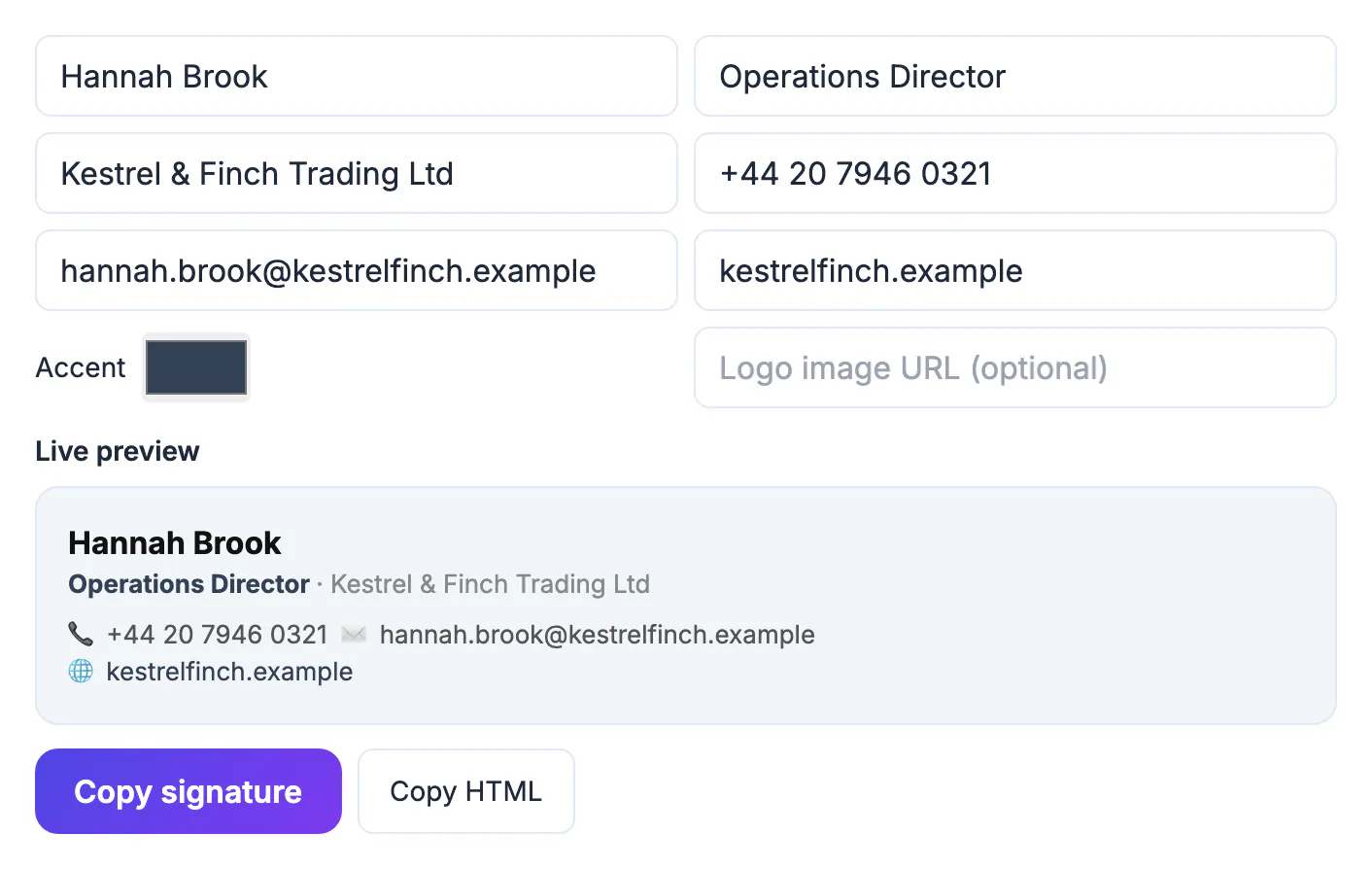
For a registered company, the signature is the easiest place for disclosures the law requires on business correspondence. Omitting them can draw fines in some countries and looks careless to clients checking who they deal with. Meanwhile many signatures carry long disclaimers that add little.
UK email signature legal requirements for companies
UK company law requires companies to disclose certain details on business letters, order forms and websites, and business emails are widely treated as business letters for this purpose. For a private or public limited company or an LLP, that means:
- The registered name in full, including Ltd, Limited, plc or LLP.
- The registered number from Companies House.
- The part of the UK where it is registered, for example Registered in England and Wales, or in Scotland.
- The registered office address.
- If share capital is mentioned at all, it must be the paid-up capital. Directors' names are optional, but if any are named, all must be.
Sole traders and partnerships using a business name must show the owners' names and an address. Check current guidance on GOV.UK and Companies House.
EU examples: Germany's GmbH rules and similar laws
Germany is the best-known strict case. Business letters of a GmbH, including emails sent in the course of business, must state:
- The company name with its legal form, for example Muster GmbH.
- The registered seat and the register court, with the commercial register number (Handelsregister, HRB).
- All managing directors (Geschäftsführer) by full name, and the chair of the supervisory board if there is one.
Similar duties apply to other German forms such as the AG. France, Ireland, Italy and other EU countries also require identifiers like registration numbers on business correspondence. Details differ, so check your national register or a local adviser rather than copying another firm's footer.
US norms, CAN-SPAM and which disclaimers to keep
The US has no general rule for ordinary signatures. CAN-SPAM covers commercial messages, those mainly advertising or promoting: they need accurate sender details, an honest subject line, a valid physical postal address and a clear opt-out honored within 10 business days. Transactional emails are largely exempt. Regulated fields such as law and finance may have extra rules.
- Worth keeping: legally required company details, a short note that you are not authorized to bind the company by email if that is your policy, and professional regulator details where your profession requires them.
- Of limited use: long confidentiality notices telling unintended recipients to delete the email. They are generally thought to carry little legal weight on their own and bury the useful lines.
- Not required: a GDPR statement in every signature; privacy information belongs in your privacy notice, which you can link.
Build a compliant signature with GrabCast's generator
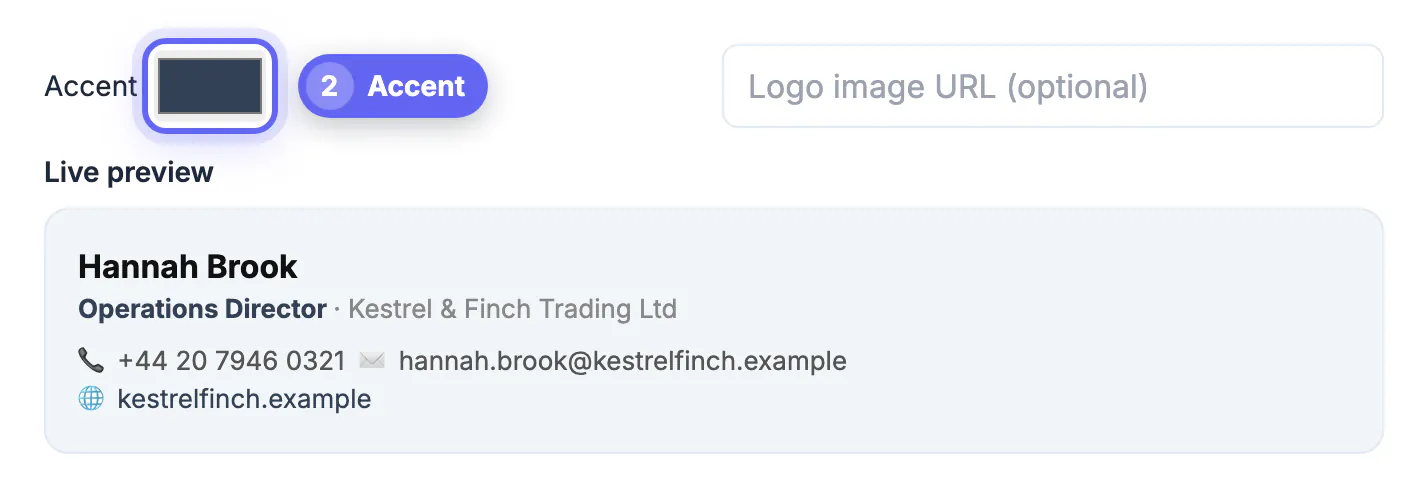
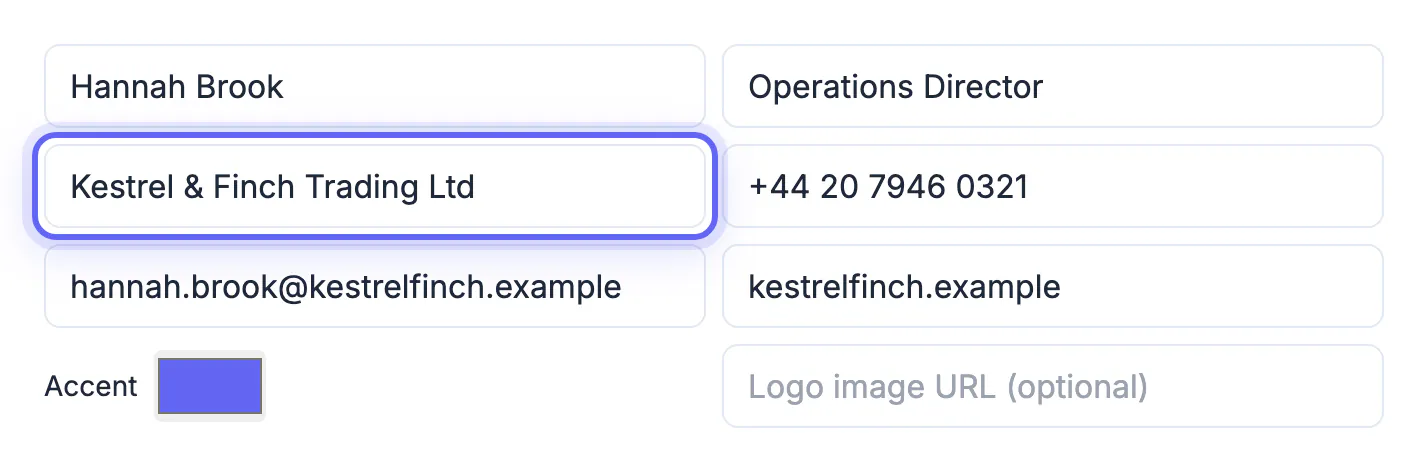
The Email Signature Generator runs in your browser and nothing you type is sent to GrabCast's server. It has fields for Full name, Job title, Company, Phone, Email and Website, an Accent color and an optional public Logo image URL, with a live preview.
- Type the full registered name in Company, for example Harper & Lane Ltd or Muster GmbH, not just a brand name.
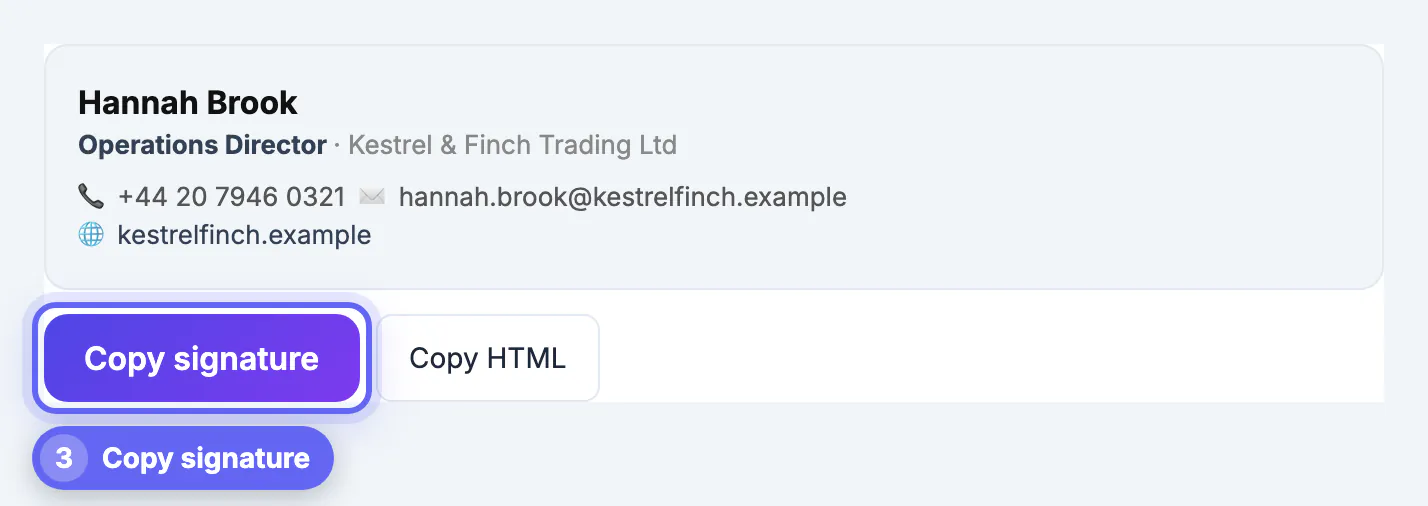
- The generator has no dedicated field for registration details or an address. After you click Copy signature and paste it into Gmail or Outlook signature settings, add a small line underneath, for example: Harper & Lane Ltd · Registered in England and Wales No. 01234567 · Registered office: address.
- Or use Copy HTML and add the disclosure line to the markup.
- Send a test email and check the website link opens.
A practical checklist for a compliant signature
Rules differ by country and company type, so treat this as a working checklist and confirm details with your registrar or adviser.
- Full registered company name, including the legal ending such as Ltd, LLP or GmbH.
- Country of registration and registration number.
- Registered office address, which may differ from your trading address.
- VAT number if the business is VAT registered and you want it shown.
- A working email address and phone number for the person named.
To design the layout, a professional email signature generator for Gmail and Outlook covers templates, and adding a logo with the right size and hosting explains how to keep images light and visible in dark mode. This article is general information, not legal advice.
Disclaimers: what helps and what does not
Long confidentiality notices rarely have legal force on their own and can make messages harder to read. Keep a short version if your sector requires it, such as regulated financial or health services, and put the longer terms on a web page you link to. Check whether your industry body requires specific wording.
Step-by-step
Common mistakes to avoid
Pro tips
Frequently asked questions
Is an email signature legally required in the UK?
No specific signature is required, but a limited company's business emails should carry its registered name, number, place of registration and registered office. A signature is the usual place for them.
What must a German GmbH include?
Company name and legal form, registered seat, register court and number, and all managing directors, plus the supervisory board chair if there is one. Check with a German adviser for your case.
Do I need a VAT number in my signature?
Generally not; VAT numbers belong on VAT invoices.
Are email confidentiality disclaimers legally binding?
They are widely considered to have limited effect on their own; keep them short.
Does CAN-SPAM apply to my everyday emails?
Mostly no. It targets commercial messages; transactional emails are largely exempt but must not mislead.
UK and many EU companies need legal identifiers on business emails; US marketing emails need an address and an opt-out. Put required details on one short line, drop disclaimer padding, and confirm your obligations with official sources; this is not legal advice.
Related guides
Browse more: all business guides · Email Signature Generator